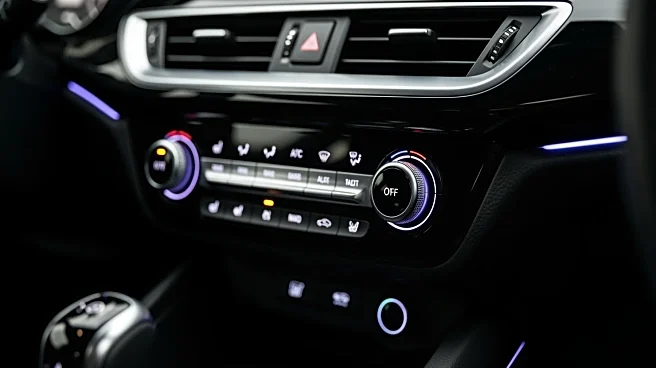




What's Happening?
Europe and China are implementing new guidelines to reduce reliance on touchscreens in vehicle interiors, emphasizing the need for tactile controls for critical functions. This move comes in response to safety concerns that digital interfaces can distract
drivers, especially in emergencies. The European New Car Assessment Programme (Euro NCAP) now requires physical controls for essential functions to achieve a five-star safety rating. Similarly, China's Ministry of Industry and Information Technology is proposing regulations mandating tactile controls for key safety features. These changes reflect a shift towards prioritizing usability and safety over digitalization in car design.
Why It's Important?
The push for tactile controls in cars addresses growing safety concerns associated with touchscreen interfaces. As vehicles become more digital, the risk of driver distraction increases, potentially leading to accidents. By reintroducing physical buttons, automakers can enhance driver focus and reaction times, improving overall road safety. This shift could influence global automotive design trends, encouraging manufacturers to balance digital innovation with practical safety considerations. The move also highlights the role of regulatory bodies in shaping industry standards to protect consumers.
What's Next?
Automakers are likely to adjust their design strategies to comply with these new guidelines, potentially leading to a resurgence of physical controls in vehicle interiors. This could result in a hybrid approach, combining digital and tactile elements to meet both consumer preferences and safety requirements. As these regulations take effect, other regions, including the U.S., may consider similar measures to enhance vehicle safety. The automotive industry will need to navigate these changes while continuing to innovate and meet consumer demands for advanced technology.