


What's Happening?
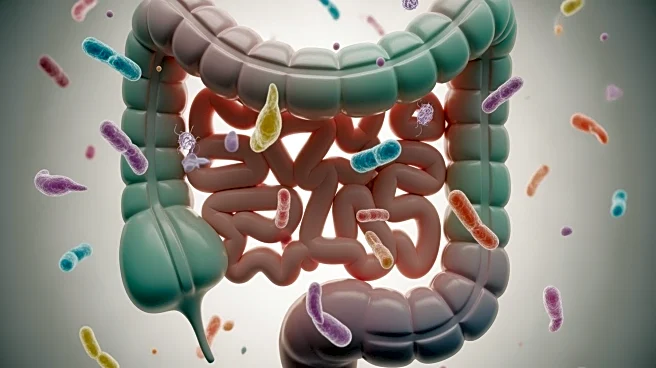
A recent study has revealed that certain intestinal bacteria can metabolize peanut allergens, potentially modulating the severity of allergic reactions. Researchers conducted experiments using mice models to investigate the role of gut microbiota in food
allergies, specifically focusing on peanut allergens Ara h 1 and 2. The study found that mice with minimal microbiota exhibited stronger anaphylactic responses compared to those with a more diverse gut microbiome. This suggests that specific bacterial species in the gut can degrade peanut allergens, thereby influencing the immune response and potentially reducing the severity of allergic reactions.
Why It's Important?
This research highlights the significant role of gut microbiota in modulating immune responses to food allergens, offering new insights into potential treatments for food allergies. Understanding how specific bacteria can influence allergic reactions could lead to the development of probiotic therapies aimed at preventing or reducing the severity of food-induced anaphylaxis. This could have a profound impact on individuals with severe food allergies, improving their quality of life and reducing the risk of life-threatening reactions. The findings also underscore the importance of maintaining a healthy and diverse gut microbiome for overall immune health.
What's Next?
Future research will likely focus on identifying the specific bacterial strains responsible for degrading peanut allergens and understanding the mechanisms involved. Clinical trials may be conducted to test the efficacy of probiotic treatments in humans with peanut allergies. Additionally, researchers may explore the potential of manipulating the gut microbiome to prevent or treat other types of food allergies. These efforts could lead to new dietary recommendations or probiotic supplements designed to enhance gut health and reduce allergy risks.