







What's Happening?
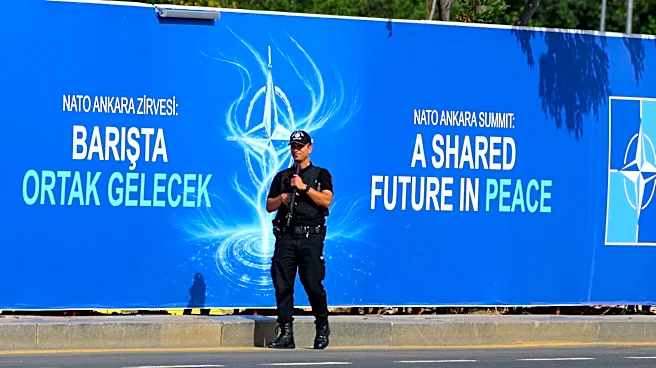
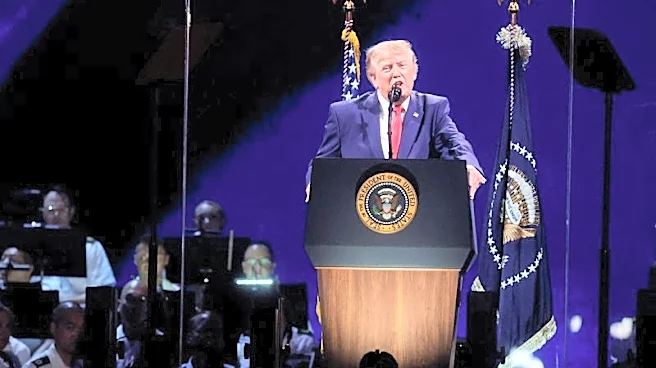
During the NATO summit in Ankara, President Trump expressed dissatisfaction with the alliance, questioning its value to the United States. He has previously threatened to withdraw from NATO, citing that the U.S. is underwriting Europe's security without
reciprocal support. Trump's recent assertion that the U.S. should control Greenland, a territory of NATO ally Denmark, has caused tension within the alliance. Although he later retracted the statement, he threatened tariffs against those opposing his stance. This move has deepened the rift between the U.S. and its European allies, who are concerned about Trump's periodic deference to Russian President Vladimir Putin.
Why It's Important?
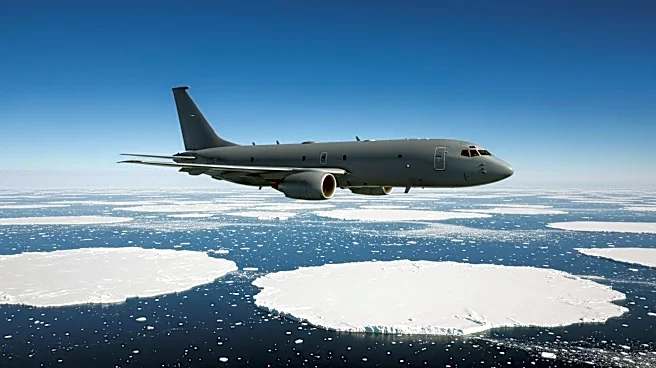
Trump's stance on NATO and his threats regarding Greenland have significant implications for international relations and U.S. foreign policy. The NATO alliance, which has been a cornerstone of Western security for 77 years, faces challenges as Trump questions its relevance. His actions could lead to a reevaluation of U.S. commitments to European security, potentially weakening the alliance. The situation also highlights the geopolitical importance of Greenland, which is strategically located in the Arctic. Trump's approach may strain U.S. relations with European allies, impacting diplomatic and military cooperation.
What's Next?
The future of U.S. involvement in NATO remains uncertain as Trump continues to express skepticism about the alliance. European leaders may seek to strengthen their own defense capabilities in response to U.S. unpredictability. The issue of Greenland's control could resurface, especially if Trump continues to emphasize its strategic importance. Additionally, Trump's relationship with Russia and his stance on European security will likely remain focal points in international diplomacy, influencing future NATO discussions and U.S. foreign policy decisions.