







What's Happening?
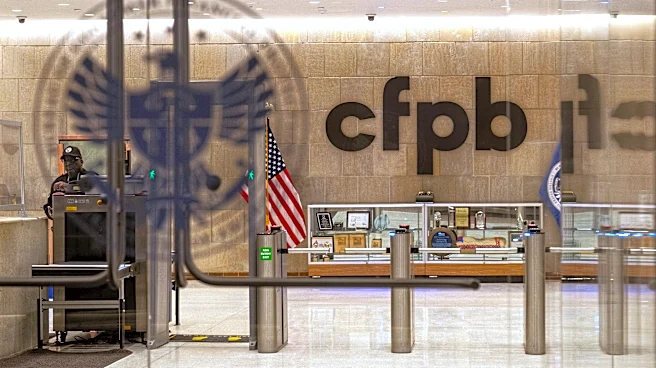
President Donald Trump has nominated Brian Johnson to lead the Consumer Financial Protection Bureau (CFPB), a move that suggests a potential shift in the agency's direction. Johnson, who previously served as the deputy director of the CFPB, is set to replace
Russ Vought, pending Senate confirmation. The CFPB was established under the Dodd-Frank Act as a financial watchdog following the subprime mortgage crisis. Trump's administration has been critical of the CFPB, arguing it lacks accountability to Congress. Johnson, who has a history of criticizing the CFPB's rule-making process, is expected to refocus the agency rather than dismantle it, unlike his predecessor Vought. His nomination has received support from industry groups such as the American Financial Services Association and the Consumer Bankers Association.
Why It's Important?
The nomination of Brian Johnson to lead the CFPB is significant as it could lead to changes in how the agency operates, potentially affecting consumers and the financial industry. The CFPB has been a contentious entity, with Democrats defending its role in protecting consumers and Republicans criticizing its regulatory reach. Johnson's leadership could result in reforms that align with the Trump administration's broader efforts to modify Dodd-Frank regulations, potentially easing regulatory burdens on small banks and altering consumer protections. This shift could impact homebuyers and financial institutions, as the CFPB plays a crucial role in overseeing financial practices and protecting consumer rights.
What's Next?
If confirmed by the Senate, Brian Johnson will likely implement changes to the CFPB's operations, focusing on reducing regulatory burdens and potentially altering consumer protection measures. His nomination is expected to face opposition from Democrats, particularly Senator Elizabeth Warren, who has been a vocal critic of the Trump administration's approach to the CFPB. The confirmation process will be closely watched, as it could signal the future direction of financial regulation in the U.S. and the balance between consumer protection and industry interests.