
What's Happening?
Following a U.S. attack on Venezuela and the arrest of its leader, Nicolás Maduro, the country's economic crisis remains unresolved. Venezuela's debts, totaling between $150 billion and $170 billion, far
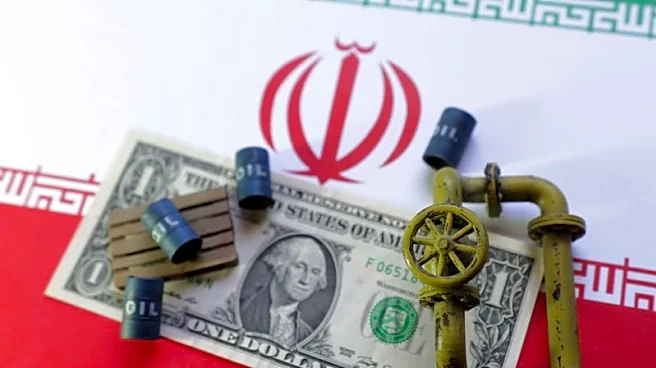
exceed its economic capacity, raising doubts about creditors recovering their losses. Iran, a significant creditor, has invested billions in Venezuela over the years through various economic projects. These include joint automobile production, housing schemes, and oil exchanges. Iran's financial exposure is compounded by its own sanctioned status, making recovery of its investments through U.S. courts unlikely.
Why It's Important?
Venezuela's debt crisis has significant implications for its creditors, including Iran, which faces potential financial losses. The situation highlights the challenges of international debt recovery, especially when involving countries under sanctions. For Iran, the inability to recoup its investments could exacerbate its economic difficulties, already strained by U.S. sanctions. The crisis also underscores the geopolitical complexities of alliances between sanctioned states, as both Iran and Venezuela have used their relationship to circumvent international restrictions.
What's Next?
With Maduro's removal, Venezuela's debt situation may see renewed international attention, but the path to resolution remains uncertain. Creditors will likely continue to pursue Venezuelan assets abroad, particularly in the U.S., where legal battles over ownership are ongoing. For Iran, the focus may shift to diplomatic efforts to protect its interests, though the prospects for financial recovery remain bleak. The broader implications for international debt markets and geopolitical alliances will continue to unfold as the situation develops.