



What's Happening?
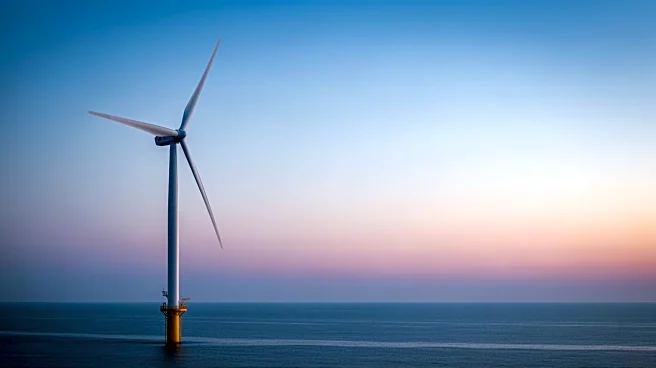
The United Kingdom is collaborating with eight other European countries, including Norway, Germany, and the Netherlands, to develop a new fleet of offshore wind projects in the North Sea. This initiative aims to strengthen energy security and reduce reliance
on fossil fuels. The project will feature interconnectors, undersea cables linking wind farms to multiple countries, which are expected to lower energy prices across the region. Energy Secretary Ed Miliband is set to sign a declaration in Hamburg, committing to the completion of the scheme by 2050. The project is part of a broader effort to develop 300 gigawatts of offshore wind capacity, with 100 gigawatts to be built jointly.
Why It's Important?
This development is significant as it represents a major step towards reducing dependency on fossil fuels and enhancing energy security in Europe. By linking wind farms to multiple countries, the project aims to stabilize energy prices and ensure a more reliable energy supply. The initiative also aligns with global efforts to combat climate change by increasing the use of renewable energy sources. However, there are concerns that the ability of wind farm operators to sell power to the highest bidder could drive up electricity prices when supply is tight. The project underscores Europe's commitment to renewable energy, despite criticism from figures like President Trump.
What's Next?
The project is expected to face challenges, including potential controversies over electricity pricing and the need for regulatory frameworks to manage cross-border energy sales. The involvement of NATO and the European Commission in the summit highlights the importance of securing offshore energy infrastructure against potential threats. As the project progresses, stakeholders will need to address these issues to ensure the successful implementation of the wind farms and the realization of their intended benefits.