




What's Happening?
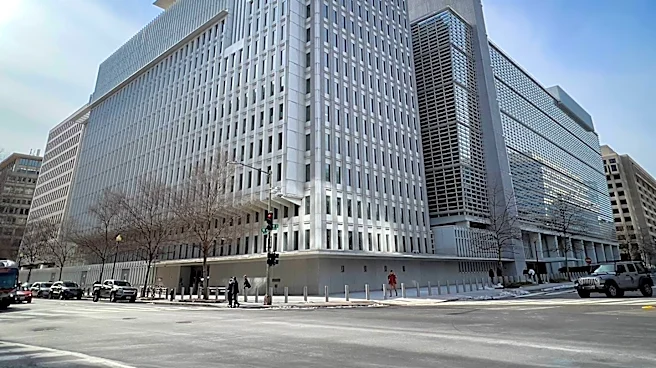
Egypt's cabinet, led by Prime Minister Mostafa Madbouly, has approved a draft presidential decree for the second phase of a World Bank development policy financing program. This program, titled 'Development Policy Financing for Enhancing Resilience, Opportunities
and Prosperity in Egypt,' aims to support reforms in three key areas: improving competitiveness and the business environment, strengthening the economy’s resilience to external shocks, and supporting the green transition. The financing agreement was signed with the International Bank for Reconstruction and Development on November 1, 2026, though the specific amount of funding was not disclosed. Development policy financing is a World Bank tool designed to provide direct budgetary support to countries in exchange for agreed-upon reforms. In addition to this, the cabinet also made decisions regarding coastal management, public contracts, and education, including authorizing the education ministry to contract with Horizon publishing for over 500,000 French-language textbooks for various school levels.
Why It's Important?
This approval signifies Egypt's continued commitment to economic reforms and sustainable development, backed by international financial institutions. The focus on improving competitiveness and the business environment is crucial for attracting foreign investment and fostering domestic growth, which can lead to job creation and increased prosperity. Strengthening the economy's resilience to external shocks is vital for maintaining stability in a volatile global economic landscape, protecting the livelihoods of citizens, and ensuring consistent economic progress. Furthermore, supporting the green transition aligns Egypt with global efforts to combat climate change and promotes sustainable practices, which can unlock new economic opportunities in renewable energy and eco-friendly industries. The World Bank's involvement provides a stamp of approval that can encourage other international investors and partners.
What's Next?
The implementation of the reforms outlined in the World Bank program will be the immediate next step. This will involve various ministries and government bodies working to enact policies that enhance competitiveness, bolster economic resilience, and advance the green transition. The newly approved National Higher Committee for Integrated Coastal Zone Management in the Mediterranean, chaired by the prime minister or his deputy, will begin its work of assigning roles, approving national strategies, and settling jurisdictional overlaps on the coast. This committee is expected to meet every three months, with its decisions being binding on government bodies. Additionally, the education ministry will proceed with its contract with Horizon publishing to supply French-language textbooks for the 2026/27 budget, impacting the educational sector.
Beyond the Headlines
The World Bank's continued support for Egypt through such programs highlights a broader trend of international financial institutions playing a significant role in guiding economic and developmental policies in emerging economies. This partnership can lead to deeper integration of Egypt into the global economy and adherence to international best practices in governance and sustainability. The emphasis on a 'green transition' also reflects a growing global imperative to address environmental concerns alongside economic development, potentially positioning Egypt as a leader in sustainable development within the region. The establishment of a dedicated committee for coastal zone management underscores the increasing recognition of environmental protection and sustainable resource management as critical components of national development strategies, particularly for countries with extensive coastlines vulnerable to climate change impacts.