
What's Happening?
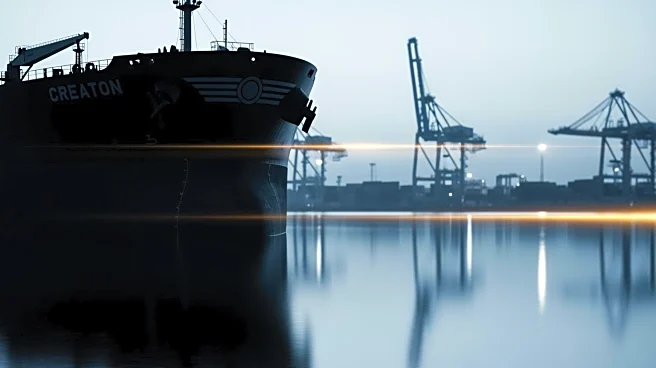
The European Union has imposed sanctions on five businessmen linked to Russian oil companies and targeted shipping companies accused of circumventing sanctions by operating Moscow's shadow fleet of aging
oil tankers. These measures aim to curb Russia's ability to generate oil revenue, which is crucial for funding its war efforts against Ukraine. The sanctions include asset freezes and travel bans, affecting companies based in the UAE, Vietnam, and Russia. The EU's actions are part of a broader strategy to pressure Russia economically and disrupt its oil trade, which has been facilitated by irregular shipping practices.
Why It's Important?
The EU's sanctions on Russia's shadow fleet represent a significant effort to undermine Russia's economic stability and its ability to sustain military operations in Ukraine. By targeting the oil trade, the EU aims to cut off a vital source of revenue for Russia, potentially impacting its economy and military funding. This move also highlights the EU's commitment to enforcing international sanctions and maintaining pressure on Russia amidst ongoing geopolitical tensions. The sanctions could lead to increased scrutiny of shipping practices and further diplomatic efforts to isolate Russia economically.
What's Next?
The EU's sanctions are likely to prompt Russia to seek alternative methods to circumvent restrictions and maintain its oil trade. This could involve strengthening ties with non-EU countries or developing new shipping routes. The EU may continue to monitor and expand its sanctions regime, potentially targeting additional entities involved in sanction-busting activities. The effectiveness of these measures will depend on international cooperation and the ability to enforce compliance among flag-carrying countries.