





What's Happening?
Portland Public Schools has introduced a new, coherent middle school design framework aimed at fostering student success. This framework is structured around three interconnected areas: Academic Programming, School Organization and Teaming, and Integrated
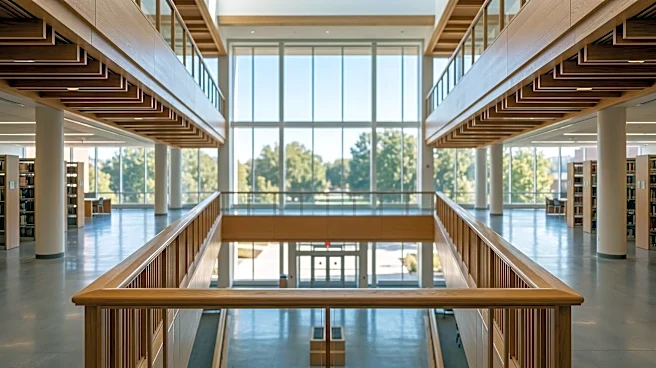
Components. The vision is to prepare all learners for a diverse and evolving world, with a mission to provide a challenging, relevant, and joyful education that empowers students. Key aspects of the academic programming include emphasizing core academic knowledge and skills, maintaining high expectations for all learners, and providing opportunities for accelerated courses without creating tracking systems. The framework also focuses on relevant, applied, and student-centered learning experiences, incorporating project-based learning, collaborative activities, and service learning. Curriculum and instructional design are based on backward design, ensuring vertical alignment across grades and developing disciplinary literacy. Assessment and feedback practices are designed to support a growth mindset, with structured opportunities for students to reflect on and revise their work. Facilities and learning environments are also considered, with a focus on providing spaces like STEM laboratories and high-quality outdoor learning areas.
Why It's Important?
This comprehensive framework is important because it seeks to create a more equitable and effective middle school experience for all students within the Portland Public Schools system. By focusing on integrated structures and shared responsibility, the district aims to ensure that every student is known, supported, and successful. The emphasis on maintaining high expectations for all learners, coupled with appropriate scaffolds, addresses long-standing concerns about educational equity and access to rigorous learning. The inclusion of diverse academic and extracurricular opportunities, from civics and arts to digital wellness and financial literacy, prepares students for a broader range of future challenges and opportunities. Furthermore, the framework's focus on collaborative planning, professional learning, and shared teacher leadership is crucial for continuous improvement in instructional practices and for building a strong, supportive adult culture within schools. This holistic approach can lead to improved academic outcomes, enhanced social-emotional development, and a more inclusive learning environment, ultimately benefiting the entire community by producing well-rounded and engaged citizens.
What's Next?
The implementation of this middle school design framework will involve ongoing collaborative planning within interdisciplinary teams. Professional learning will be driven by student work, assessment data, curriculum implementation, and instructional inquiry, with regular Instructional Rounds to build teacher networks and foster professional growth. The district will utilize coaching, observation, collaborative reflection, lesson refinement, and analysis of student work to continuously improve teaching practices. A key next step is to build shared teacher leadership and collective responsibility for student success, ensuring that teams are accountable for every student, not just those on an individual teacher's roster. Cross-functional teams, including general education, special education, ESOL, counseling, intervention, and administration, will function as integrated instructional units. Leadership structures will be created to distribute expertise across schools, empowering teams through collaborative decision-making while maintaining district-wide coherence and equitable student experiences. The framework also outlines continuous improvement cycles where teams identify problems, test solutions, study results, and refine implementation.
Beyond the Headlines
Beyond the immediate implementation, this framework signifies a deeper commitment to systemic change within the Portland Public Schools. The emphasis on culturally responsive teaching, inclusive instructional practices, and supporting multilingual learners addresses critical societal needs for equity and representation in education. By valuing students' home languages and cultural identities, the framework aims to create a more affirming and welcoming environment, which can have profound long-term impacts on student engagement and academic achievement. The focus on social-emotional learning, mental health support, and positive behavioral interventions moves beyond traditional academic metrics to foster holistic student well-being. This approach recognizes that a student's success is not solely dependent on academic rigor but also on their sense of belonging, safety, and purpose. The framework's call for strong partnerships with multilingual families and community organizations also highlights a shift towards a more collaborative and community-integrated educational model, which can strengthen the social fabric of the city and create a more supportive ecosystem for all children.