


What's Happening?
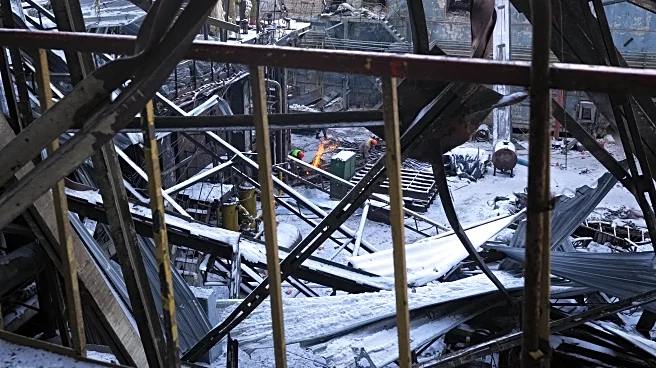
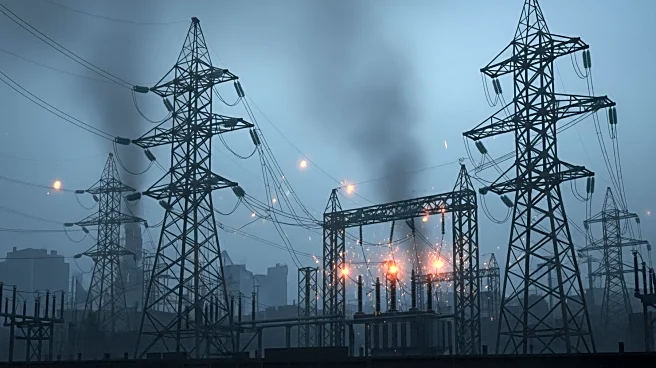
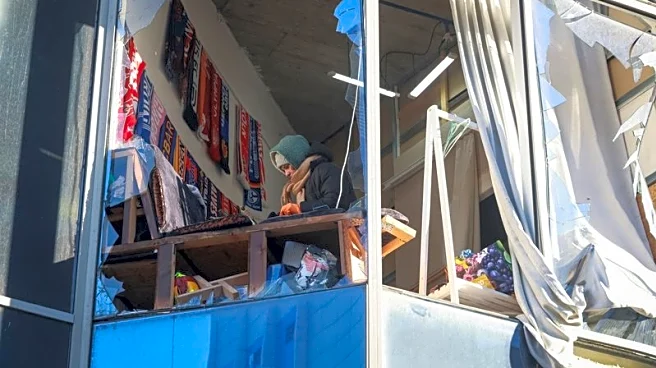
In Kyiv, residents are facing severe power outages, with electricity cuts lasting up to 20 hours a day due to Russian strikes on thermal plants. These attacks have left many buildings without heat, plunging some areas into prolonged darkness. Despite
these challenges, Ukrainians are finding innovative ways to cope. Residents of Soviet-era apartment blocks have formed Condominium Owners Associations (OSBBs) to manage and upgrade their buildings, improving energy efficiency and reducing utility costs. These efforts have been crucial for survival during the ongoing conflict. The OSBB movement has led to significant improvements, such as the installation of new heating units, insulated pipes, and solar panels, which have helped maintain warmth and functionality in buildings even during extended power outages.
Why It's Important?
The resilience and adaptability of Ukrainian residents highlight the broader implications of civilian response to infrastructure attacks in conflict zones. The ability to maintain essential services despite targeted strikes demonstrates a significant level of community organization and resourcefulness. This situation underscores the importance of local initiatives and government support in crisis management. The OSBBs' success in improving energy efficiency not only aids in immediate survival but also sets a precedent for sustainable urban living in post-conflict reconstruction. The Ukrainian experience may serve as a model for other regions facing similar challenges, emphasizing the role of community-driven solutions in enhancing resilience against external threats.
What's Next?
As the conflict continues, further adaptations and innovations are likely to emerge from Ukrainian communities. The ongoing support from city authorities, such as funding for energy-efficiency projects, will be crucial in sustaining these efforts. The development of more OSBBs and similar initiatives could lead to widespread improvements in living conditions across Ukraine. Additionally, the international community may increase support for Ukraine's energy infrastructure, recognizing the strategic importance of maintaining civilian resilience. The situation may also prompt discussions on international policies regarding the protection of civilian infrastructure in conflict zones.
Beyond the Headlines
The Ukrainian response to energy crises highlights deeper cultural and societal shifts towards self-reliance and community solidarity. The OSBB movement reflects a growing trend of grassroots empowerment, where residents take collective action to address shared challenges. This shift may influence future urban planning and policy-making, prioritizing community involvement and sustainable practices. The crisis also raises ethical questions about the targeting of civilian infrastructure in warfare, potentially influencing international humanitarian law and conflict resolution strategies.