





What's Happening?
California is grappling with a severe housing shortage, estimated at 4 million units nationally, prompting a debate over the most effective solutions. State Senator Scott Wiener's SB 79 aims to address this by overriding local zoning regulations to permit
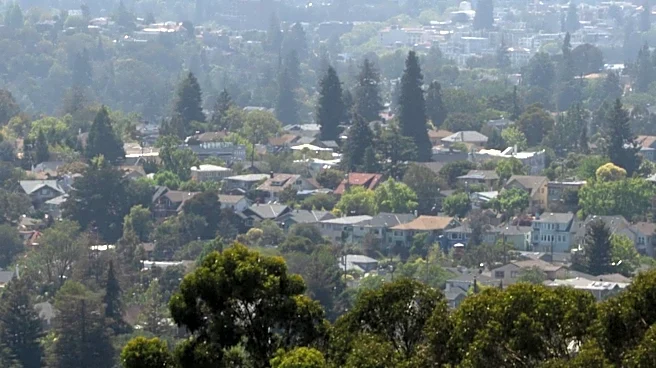
the construction of high-rise apartment buildings near transit hubs. However, this approach is being challenged by the sentiment that Californians, like most Americans, prefer single-family homes with space, yards, driveways, and privacy. Gubernatorial candidate Steve Hilton advocates for a strategy of "build outward, not upward," suggesting that the state should focus on developing more single-family homes rather than concentrating on urban high-rises. This perspective argues that current policies, which favor high-rise developments, do not align with the housing preferences of the majority of residents.
Why It's Important?
The debate over California's housing strategy has significant implications for the state's economy, environment, and social fabric. The current housing shortage contributes to high living costs, exacerbates homelessness, and can hinder economic growth by making it difficult for workers to afford to live near their jobs. The "build outward" approach, if adopted, would necessitate substantial investments in infrastructure such as water storage, energy production, roads, and public transportation. This could lead to significant economic opportunities in construction and related industries but also raises concerns about urban sprawl and environmental impact. Conversely, the "build upward" strategy, while potentially more environmentally friendly in terms of land use, faces resistance due to a perceived lack of desirability and its impact on community character. The outcome of this debate will shape California's future development, influencing everything from property values to quality of life.
What's Next?
The discussion around California's housing crisis is expected to intensify, particularly with gubernatorial candidate Steve Hilton's "build outward" proposal. This will likely lead to further legislative debates and public discourse on the efficacy and desirability of different housing development models. Policymakers will need to consider how to balance the urgent need for more housing with residents' preferences, environmental concerns, and infrastructure requirements. Potential next steps could include pilot programs for outward expansion, re-evaluation of existing zoning laws, and increased investment in both urban and suburban infrastructure. The state may also explore innovative solutions that combine elements of both strategies, such as developing mixed-use communities that offer a variety of housing types. The political will to overcome existing "green" orthodoxies and invest in a 21st-century infrastructure will be crucial for any significant progress.
Beyond the Headlines
Beyond the immediate policy debate, the California housing crisis and the "build outward, not upward" discussion touch upon deeper cultural and philosophical questions about the American Dream and the ideal living environment. The preference for single-family homes with yards reflects a long-standing cultural value of privacy, ownership, and personal space, often associated with suburban living. The critique of high-rise apartments as "ugly urban" and not a "long-term investment" highlights a resistance to denser, more urbanized living models. This conflict reveals a tension between modern urban planning ideals, which often advocate for density and transit-oriented development, and traditional American aspirations. The debate also implicitly questions the role of government in shaping residential patterns and the extent to which policymakers should cater to existing preferences versus guiding societal shifts towards more sustainable or equitable living arrangements. It's a reflection of how deeply ingrained housing choices are in personal identity and societal values.