


What's Happening?
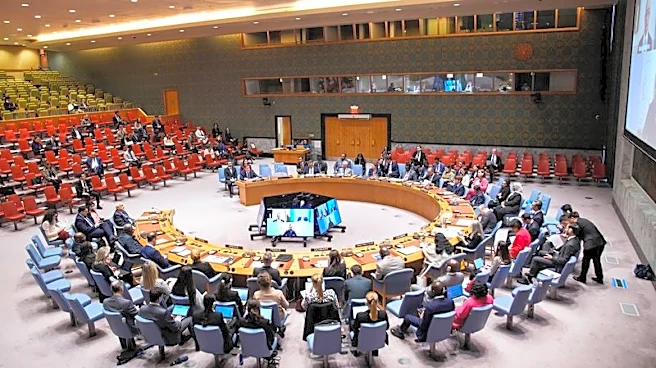
Portugal and Austria have won seats on the United Nations Security Council, defeating Germany in a competitive election. The election, held by secret ballot, is part of the process to fill the 10 rotating seats on the 15-member council, which also includes
five permanent members with veto power: the United States, Russia, China, Britain, and France. Portugal received 134 votes, Austria 131, while Germany, which has served six previous terms, garnered 104 votes. The election results reflect ongoing geopolitical tensions, particularly related to Germany's support for Ukraine and its stance on Middle Eastern conflicts. Additionally, Kyrgyzstan defeated the Philippines to join the council for the first time, while Zimbabwe and Trinidad and Tobago secured uncontested seats.
Why It's Important?
The election results are significant as they alter the composition of the Security Council, a body responsible for maintaining international peace and security. The inclusion of Portugal and Austria may shift the dynamics within the council, especially in discussions involving European interests. Germany's loss is attributed to its strong support for Ukraine, which may have influenced voting patterns. The results also highlight the challenges in reforming the Security Council to better reflect current global realities, as the veto power of permanent members often leads to inaction on critical issues. This shake-up could impact how the council addresses ongoing conflicts and geopolitical tensions.
What's Next?
The newly elected members will assume their roles on January 1, replacing Denmark, Greece, Pakistan, Panama, and Somalia. As these countries prepare to take their seats, they may face pressure to address stalled reform efforts within the Security Council. The ongoing geopolitical tensions, particularly involving Ukraine and the Middle East, will likely be key issues for the new members. The election results may also prompt Germany to reassess its diplomatic strategies and alliances within the U.N. framework.