



What's Happening?
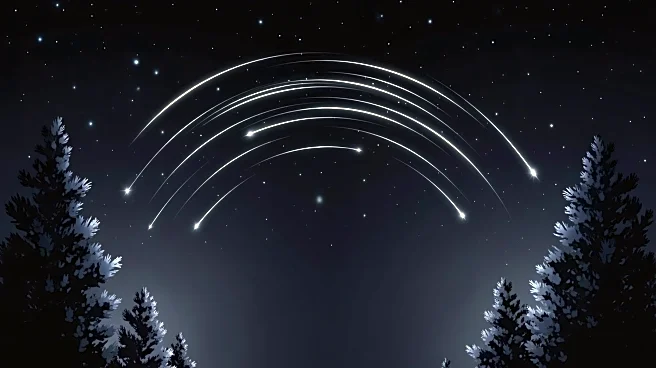
The Ursid meteor shower, the last major meteor event of the year, is set to peak soon, offering a celestial display in the nighttime and early morning skies. This meteor shower, while more subdued compared to others, is still anticipated to provide a captivating
spectacle. Meteor showers occur when space debris enters Earth's atmosphere at high speeds, creating fiery trails known as shooting stars. The Ursids are expected to peak from Sunday night into Monday morning and will remain visible until December 26 from the Northern Hemisphere. Typically, skywatchers can observe five to ten meteors per hour, with potential outbursts reaching up to 25 meteors per hour, as noted by the American Meteor Society. The visibility of the shower is influenced by the amount of space debris and the moon's brightness, which can obscure the meteors. However, the narrow crescent moon during the peak will not significantly hinder the view. The Ursids originate from the comet 8P/Tuttle, and no special equipment is required to view them. Observers are advised to find dark locations away from city lights for the best experience.
Why It's Important?
Meteor showers like the Ursids offer a unique opportunity for people to connect with the cosmos and appreciate the natural wonders of the universe. These events can inspire interest in astronomy and science, encouraging educational pursuits and public engagement with space-related topics. The Ursid meteor shower, occurring during the holiday season, provides a timely occasion for families and communities to gather and share in the experience of stargazing. Additionally, such celestial events can boost local tourism in areas known for clear skies and minimal light pollution, as enthusiasts travel to optimal viewing locations. The visibility of the Ursids, despite being less intense than other showers, highlights the importance of preserving dark skies and reducing light pollution to maintain the ability to observe such natural phenomena.
What's Next?
As the Ursid meteor shower approaches its peak, astronomers and enthusiasts will continue to monitor weather conditions to ensure optimal viewing opportunities. Clear skies are essential for the best experience, and forecasts will play a crucial role in determining the best locations for observation. Public interest in the event may lead to organized viewing parties and educational programs hosted by local observatories and astronomy clubs. These gatherings can provide additional context and information about the meteor shower and its origins. Looking ahead, the success of the Ursid meteor shower in capturing public attention may influence future efforts to promote and educate about upcoming astronomical events, fostering a greater appreciation for the night sky.