








What's Happening?
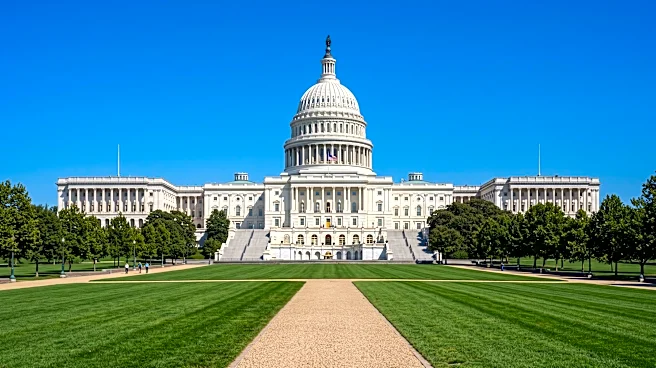
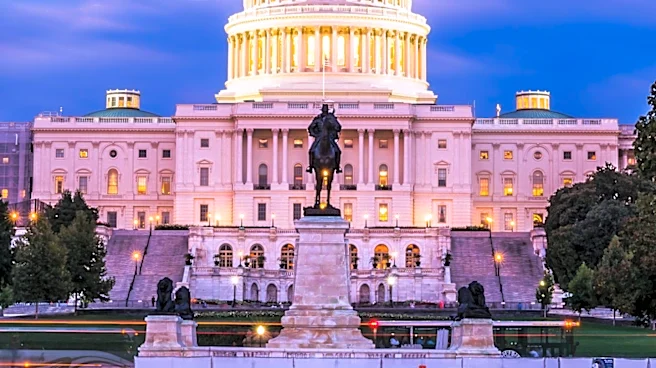
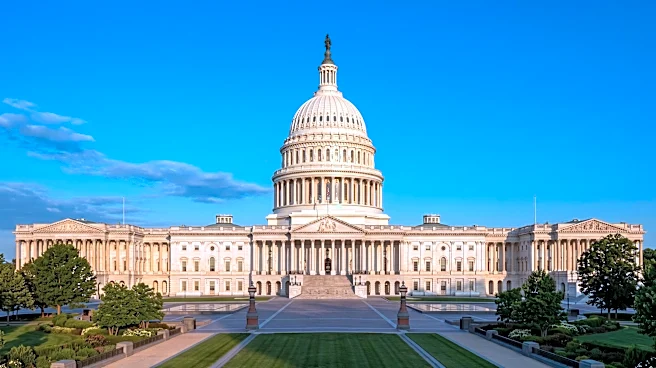
A bipartisan group of U.S. Congress members, including U.S. Representative Brian Mast (R-FL), Rick Larsen (D-WA), Suzanne Bonamici (D-OR), and Mike Haridopolos (R-FL), introduced a resolution to officially designate a week in September as National Estuaries
Week. While this week has been informally celebrated by federal and nonprofit partners for some time, the resolution formally recognizes estuaries as vital habitats and ecosystems. These areas are critical for various wildlife, including birds, fish, and other endangered and protected species. Estuaries, where rivers, streams, and the ocean meet, are among the most productive environments globally, supporting diverse communities of wildlife and offering protection to coastlines from waves, storms, and erosion.
Why It's Important?
The official recognition of National Estuaries Week through a congressional resolution highlights the increasing awareness and importance of coastal resilience and environmental conservation in U.S. policy. Estuaries play a crucial role in the nation's ecological health and economic well-being, providing essential habitats, supporting commercial and recreational fishing industries, and acting as natural buffers against climate change impacts. This bipartisan effort signals a consensus on the need to protect these critical ecosystems, which can lead to more robust funding and policy support for conservation initiatives. For coastal communities, the health of estuaries directly impacts their safety, economic stability, and quality of life, making this recognition a significant step towards safeguarding these invaluable natural resources.
What's Next?
The introduction of this resolution is part of a broader legislative push to protect estuaries and coastal habitats. Audubon, a conservation organization, is actively championing several key pieces of legislation, including the ESTUARIES Act, which reauthorizes the National Estuary Program, and the Resilient Coasts and Estuaries Act, which reauthorizes critical components of the Coastal Zone Management Act. Additionally, efforts are underway to reauthorize the Great Lakes Restoration Initiative, a program that has funded thousands of projects to improve water quality and restore habitats. The passage of these bills would ensure continued federal funding and support for programs vital to the preservation and restoration of estuaries across the U.S., impacting millions of people and countless species.
Beyond the Headlines
The focus on estuaries extends beyond immediate environmental protection to encompass broader issues of climate change adaptation and sustainable development. Healthy estuaries are natural defenses against rising sea levels and increasingly severe weather events, offering cost-effective solutions compared to engineered infrastructure. The bipartisan support for this resolution and related legislation suggests a growing understanding that environmental conservation is not just an ecological imperative but also an economic and national security one. This shift in perspective could foster more integrated approaches to coastal management, involving federal, state, and local governments, as well as private organizations. It also highlights the interconnectedness of ecosystems, where the health of estuaries directly impacts the well-being of diverse wildlife and human populations, emphasizing the need for holistic conservation strategies.