
What's Happening?
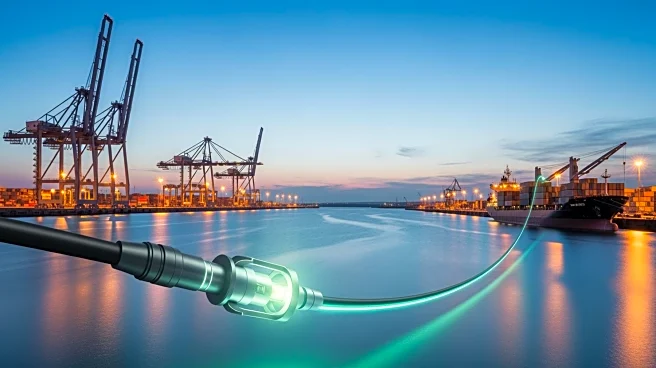
The Port of Rotterdam, Europe's largest port, has awarded a contract to global technology company ABB to construct and maintain the world's largest shore power capabilities. This initiative is part of a joint
venture between the Port of Rotterdam Authority and Eneco, known as Rotterdam Shore Power (RSP). The project aims to install shore power solutions at key terminals, allowing vessels to turn off their engines while docked. This development is crucial for reducing emissions, as it is expected to cut annual carbon dioxide emissions by approximately 96,000 metric tonnes by 2030. The shore power systems will be operational by the second half of 2028, ahead of the EU's 2030 deadline for ports to provide onshore power supply. The project will cover eight kilometers of quay and provide power at 35 connection points, enabling 32 container ships to connect simultaneously.
Why It's Important?
The implementation of shore power systems at the Port of Rotterdam is a significant step towards reducing maritime emissions and noise pollution. By allowing vessels to connect to the local electricity grid, the port will improve air quality and contribute to the EU's broader environmental goals. This initiative positions Rotterdam as a leader in port electrification, setting a precedent for other ports to follow. The reduction in emissions aligns with the EU's FuelEU Maritime Regulation, which mandates zero-emission technology for large ships in EU ports by 2030. The project also highlights the importance of public-private partnerships in achieving sustainability goals, as evidenced by the collaboration between the Port of Rotterdam Authority, Eneco, and ABB.
What's Next?
The installation of the shore power systems is set to begin in the second half of the next year, contingent on final investment decisions and permit approvals. The Dutch government has already provided subsidies under the Temporary Climate Subsidy Scheme to support these projects. As the systems become operational, other ports may look to Rotterdam as a model for implementing similar technologies. The success of this project could influence future EU regulations and encourage further investment in sustainable port infrastructure. Stakeholders, including environmental groups and maritime companies, will likely monitor the project's progress and impact closely.