




What's Happening?
The National Endowment for Democracy (NED) and its Core Institutes are actively supporting partners worldwide to combat forced labor and strengthen markets. This initiative focuses on exposing and dismantling systems that perpetuate forced labor, pursuing
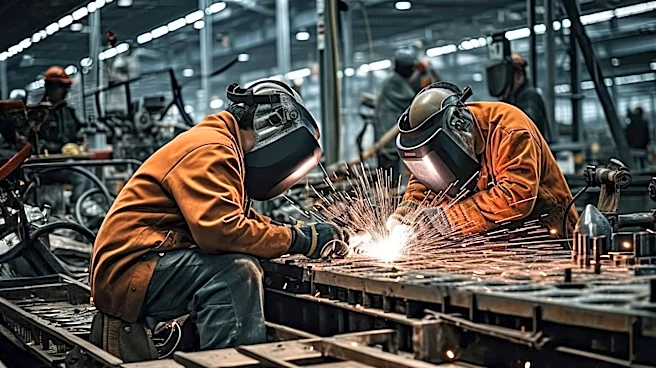
accountability for rights violations, enhancing transparency in global supply chains, and establishing local oversight mechanisms to prevent abuses. NED's efforts have led to significant outcomes, including a major automaker withdrawing from China's Uyghur region in 2024 due to forced labor risks in automobile parts production. Additionally, NED partners informed U.S. government actions, such as adding 43 entities to the Uyghur Forced Labor Prevention Act Entity List in July 2026. Investigations also revealed wage withholding, illegal recruitment fees, and excessive overtime by subcontractors of a state-supported Chinese electric vehicle maker, prompting corrective measures. In Cuba, NED partners exposed human trafficking through coerced medical missions, generating public pressure to end such programs. In Cambodia, civic groups supported by NED are uncovering scam centers that traffic vulnerable populations for online fraud, informing efforts to close these operations. Furthermore, a NED-supported group exposed North Korea's evasion of sanctions through forced labor in mineral production, providing actionable intelligence to authorities.
Why It's Important?
The work of NED and its partners is crucial for both human rights and economic security, particularly for the United States. Forced labor undermines fundamental freedoms and human dignity globally, but it also directly harms the U.S. economy by allowing goods produced through exploitation to undercut American businesses and workers. By strengthening democratic institutions and local economies, NED's initiatives contribute to a fairer global marketplace. The exposure of forced labor in critical supply chains, such as those for automobile parts and electric vehicles, highlights the ethical and economic risks faced by U.S. companies operating internationally. The influence on U.S. government policy, including the expansion of the Uyghur Forced Labor Prevention Act Entity List, demonstrates the direct impact of these investigations on national efforts to combat human rights abuses and protect American economic interests. Moreover, by disrupting illicit networks and promoting transparency, NED's work helps ensure that global trade operates on a more equitable and ethical foundation, benefiting workers and businesses in the U.S. and abroad.
What's Next?
NED and its partners will continue their efforts to expose and dismantle forced labor systems globally. Future actions will likely involve ongoing investigations into complex global supply chains, particularly in regions identified as high-risk for exploitation. The focus will remain on building local oversight mechanisms and advocating for stronger labor protections. Continued collaboration with governments, civic groups, and industry leaders is anticipated to drive policy changes and corporate accountability. For instance, in Bangladesh, the Solidarity Center's ongoing advocacy is expected to further strengthen labor laws and worker protections. In Uzbekistan, efforts will continue to support higher labor standards to facilitate greater access to Western markets for Uzbek businesses. The insights gained from these investigations will likely inform further U.S. government actions, potentially leading to additional sanctions or trade restrictions against entities involved in forced labor. The goal is to foster a global environment where workers' rights are protected, and fair economic competition prevails.
Beyond the Headlines
The fight against forced labor extends beyond immediate economic and human rights concerns, touching upon deeper ethical and geopolitical implications. The increasing use of forced labor by authoritarian regimes and corrupt actors to fund repression and evade sanctions highlights a critical intersection of human rights, national security, and international relations. The reliance on complex global supply chains makes it challenging to identify and eliminate forced labor, raising questions about corporate responsibility and due diligence. The efforts by NED and its partners underscore the importance of transparency and accountability in an interconnected world, where consumer choices and corporate practices can inadvertently support exploitative systems. This work also reflects a broader shift towards integrating human rights considerations into trade and economic policies, recognizing that ethical sourcing and fair labor practices are not just moral imperatives but also essential for stable and resilient global markets. The long-term success of these initiatives could lead to a re-evaluation of global manufacturing and sourcing strategies, prioritizing ethical production over cost-cutting measures.