






What's Happening?
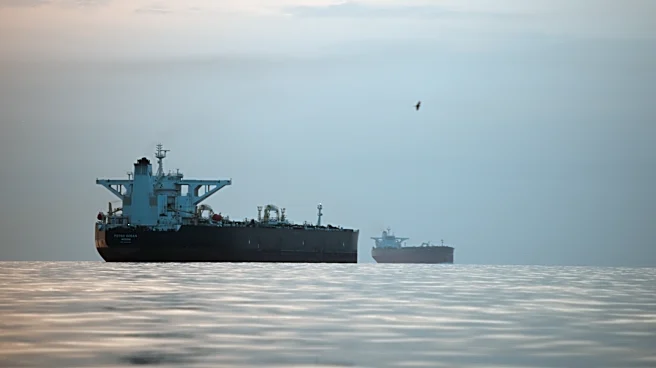
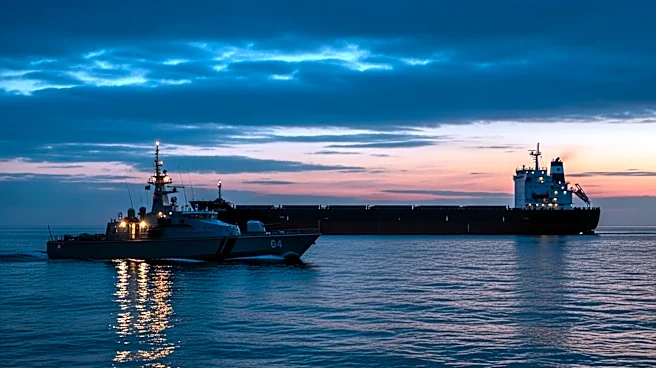
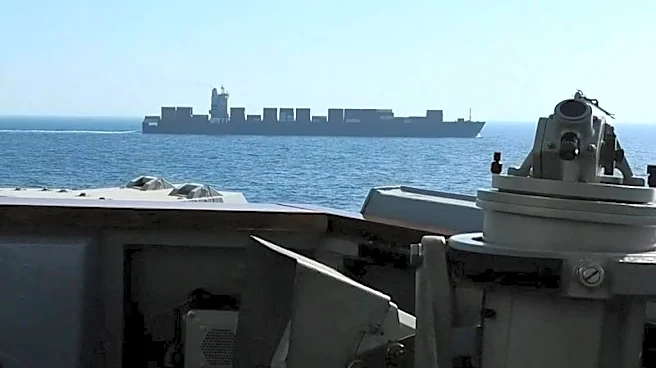
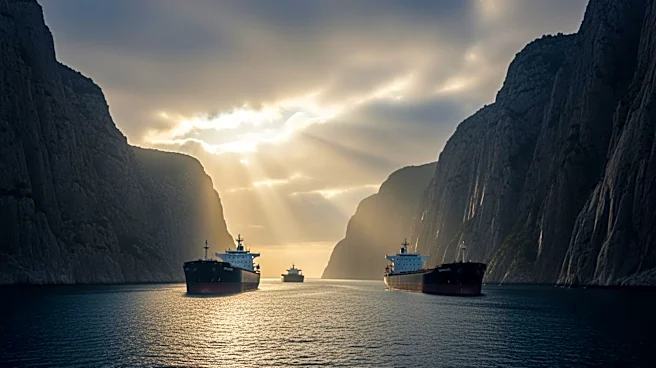
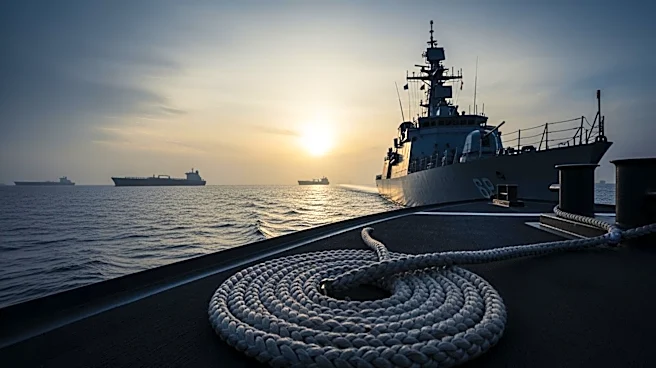
Iran has reportedly seized two ships in the Strait of Hormuz following President Trump's extension of the ceasefire with Iran. The U.S. has maintained a naval blockade in the region, which has led to significant economic pressure on Iran. The White House
has stated that President Trump is satisfied with the blockade, which is reportedly causing Iran to lose $500 million a day. The situation remains tense, with the U.S. Central Command denying reports that some ships have breached the blockade. The Iranian Revolutionary Guard Corps has warned of 'crushing blows' if fighting resumes.
Why It's Important?
The seizure of ships by Iran in the Strait of Hormuz is a critical development in the ongoing conflict between Iran and the U.S. The Strait is a strategic chokepoint for global oil shipments, and any disruptions can have significant implications for global oil prices and economic stability. The U.S. blockade is exerting substantial economic pressure on Iran, which could lead to further escalation if not managed carefully. The situation also impacts international relations, as countries dependent on oil shipments through the Strait may be forced to seek alternative routes or suppliers.
What's Next?
The ongoing tensions in the Strait of Hormuz are likely to continue, with potential for further escalation if diplomatic solutions are not found. The U.S. and Iran may engage in further negotiations, possibly mediated by third-party countries, to de-escalate the situation. The international community will be closely monitoring developments, as any significant disruption in oil shipments could have widespread economic consequences. The U.S. may also consider additional measures to ensure the security of maritime routes in the region.