




What's Happening?
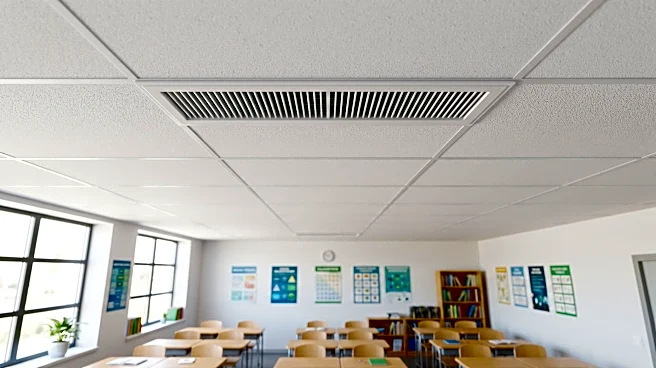
A mother in Jonesboro, Jocelyn Stargell-Zachery, has repeatedly pulled her son from Callaway Elementary School due to severe headaches caused by excessively hot classroom temperatures. The classroom lacks central air conditioning, and portable units provided
by Clayton County Public Schools are proving insufficient to cool the space. Stargell-Zachery reported that her son became ill from the heat, prompting her to purchase personal cooling devices for him. Clayton County Public Schools stated that its facilities and maintenance team is actively assessing and troubleshooting the ongoing HVAC issues. Portable air conditioning units were deployed to maintain comfortable conditions while permanent repairs are addressed. However, the school district has not yet provided a timeline for when these permanent air conditioning improvements will be completed in the affected classrooms.
Why It's Important?
This situation highlights significant concerns regarding student well-being and educational equity within public school systems. When classroom environments become physically unbearable due to extreme temperatures, it directly impacts students' health, concentration, and ability to learn effectively. The need for parents to remove children from school due to inadequate facilities can lead to missed instructional time, potentially widening achievement gaps. For school districts, persistent HVAC failures can erode parental trust, lead to increased absenteeism, and necessitate unplanned expenditures for temporary solutions. It also underscores the broader challenge many older school buildings face in maintaining modern climate control standards, especially as climate patterns lead to more frequent or intense heat waves.
What's Next?
Clayton County Public Schools' facilities and maintenance team will continue to assess and troubleshoot the HVAC issues at Callaway Elementary. The immediate next steps involve determining the root cause of the cooling failures and formulating a plan for permanent air conditioning improvements. The district will likely face pressure from parents, like Stargell-Zachery, to provide a clear timeline for these repairs and to ensure that all classrooms offer a conducive learning environment. Depending on the duration of the heatwave and the pace of repairs, more students might experience similar health issues, potentially leading to further absences or calls for more immediate solutions from the school board and community stakeholders.
Beyond the Headlines
This incident points to a systemic issue in public infrastructure, particularly in older school buildings that may not have been designed for current climate realities or have aging systems. The reliance on portable air conditioning units as a stopgap measure often indicates a larger deferred maintenance problem within school districts, which can be exacerbated by budget constraints. Beyond the immediate discomfort, prolonged exposure to high temperatures can have long-term health implications for children. Furthermore, the situation raises questions about environmental justice, as schools in certain communities might disproportionately suffer from inadequate infrastructure, affecting the most vulnerable student populations. Addressing these issues requires significant investment in school infrastructure and proactive planning for climate resilience.