





What's Happening?
The Committee to Protect Journalists (CPJ) reports that more than 300 journalists were imprisoned worldwide as of December 1, 2025. This marks the fifth consecutive year that the number of imprisoned journalists has exceeded 300, reflecting a global trend
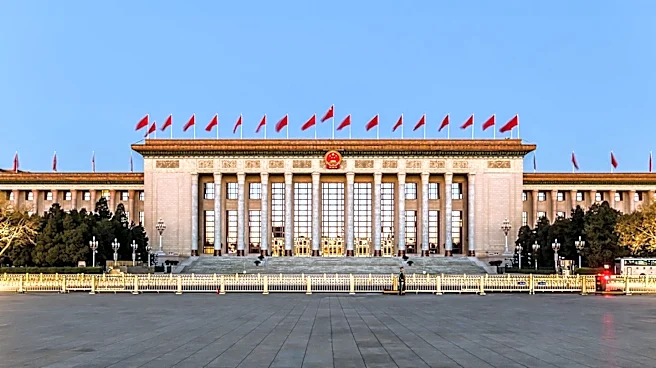
of rising authoritarianism and an increasing number of armed conflicts. China has been identified as the world's worst jailer of journalists for three consecutive years, holding at least 50 in 2025. Myanmar rose to second place with 30 journalists imprisoned, while Israel, with 29, fell to third. Azerbaijan entered the top 10 for the first time since 2018, nearly doubling its prisoner count. The CPJ emphasizes that these persistently high numbers highlight a severe threat to press freedom and the safety of journalists globally.
Why It's Important?
The alarming number of journalists imprisoned worldwide, as reported by the CPJ, has significant implications for U.S. foreign policy and its commitment to democratic values. The suppression of journalists in various countries, including those considered U.S. allies, undermines the principles of freedom of speech and a free press, which are cornerstones of democratic societies. This trend of rising authoritarianism can lead to increased global instability, human rights abuses, and a decline in transparency, all of which can challenge U.S. interests and influence. The imprisonment of journalists also restricts the flow of accurate information, making it harder to address global challenges such as conflict, corruption, and humanitarian crises. For the U.S., this situation necessitates a robust diplomatic response, including advocating for the release of imprisoned journalists and supporting international efforts to protect media freedom, as the erosion of press freedom abroad can ultimately impact the global information landscape and democratic norms.
What's Next?
The CPJ has joined the October 30 Coalition of human rights organizations to issue a joint statement marking the International Day of Political Prisoners, calling for sustained international attention to individual political prisoners and efforts to secure their release. The CPJ will continue to mobilize political pressure, lead solidarity campaigns, and take legal action to advocate for imprisoned journalists. They also provide direct legal, medical, and trauma assistance to journalists. The organization calls on governments to uphold the rule of law, stop criminalizing journalists, and rescind policies that hinder reporting. The international community is urged to uphold the fundamental right to a free press and ensure the safety of journalists, particularly in conflict zones. These efforts aim to reverse the tide of imprisonments and promote accountability for abuses against journalists.
Beyond the Headlines
The consistent high number of imprisoned journalists over the past five years points to a systemic and evolving challenge to press freedom that goes beyond individual incidents. The report highlights that many journalists are held in cruel and life-threatening conditions, often without charge or for extended periods, violating international law. This suggests a deliberate strategy by authoritarian regimes to silence dissent and control narratives, using legal and extra-legal means. The fact that Israel, traditionally considered a democracy, is on the list due to the rapid imprisonment of Palestinian journalists, many on undisclosed charges, raises complex questions about the application of justice and human rights in conflict zones. This situation underscores the need for a nuanced understanding of press freedom challenges, recognizing that even democratic states can exhibit concerning practices under certain circumstances. The long-term impact could be a chilling effect on investigative journalism and critical reporting, leading to a less informed global citizenry and a weakening of democratic accountability worldwide.