

What's Happening?
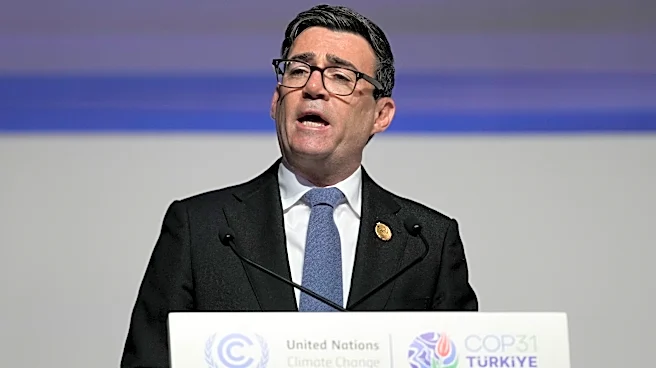
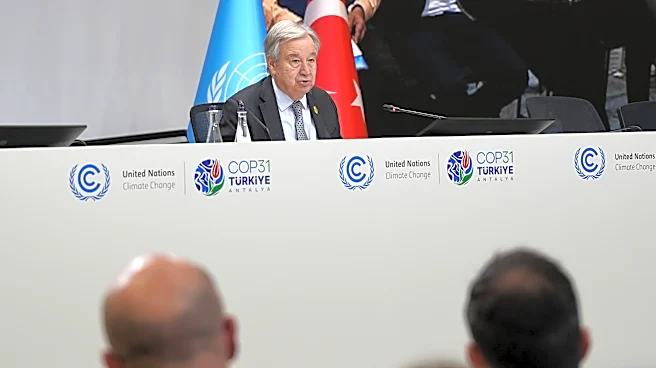
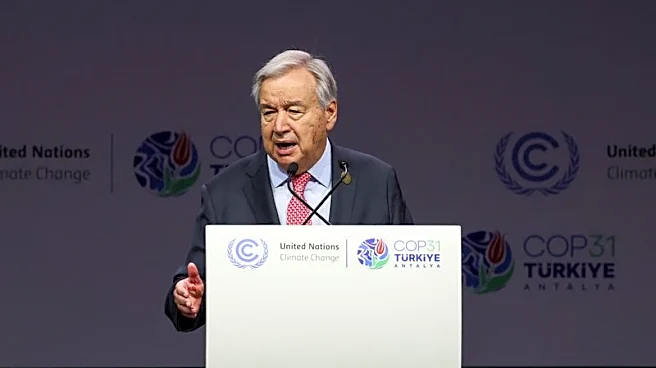
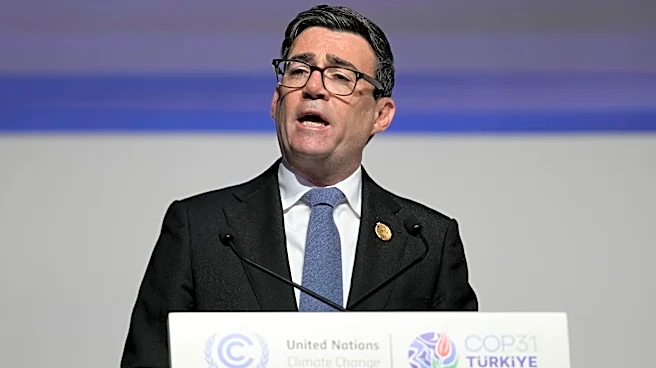
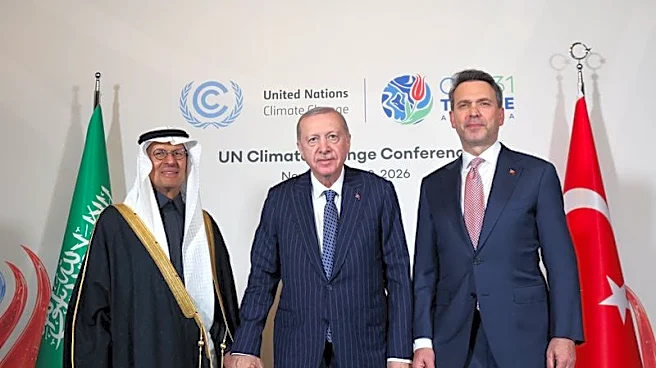
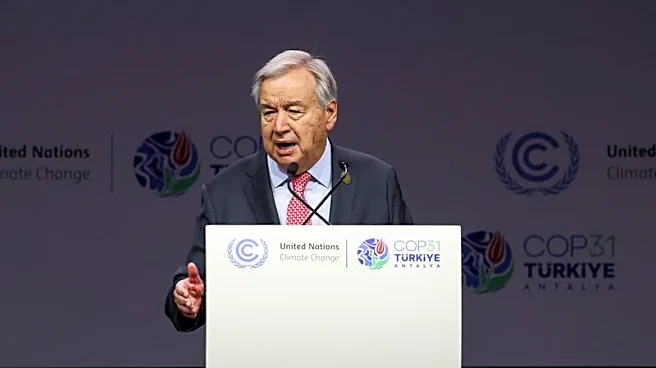
At the annual United Nations COP31 climate change conference in Antalya, Turkey, new reports have highlighted the world's continued failure to contain global warming. Climate Action Tracker, a nonprofit group, reported that the planet is still on track
for a nearly 5-degree Fahrenheit warming by 2100, which would cause widespread devastation. Concurrently, the European Union’s Copernicus climate change service indicated a significant acceleration in global warming since the 2015 Paris Agreement. The projection for surpassing the Paris Agreement's 2.7-degree Fahrenheit threshold above preindustrial levels has moved from around 2045 to as early as 2029. Scientists attribute this acceleration primarily to the ever-increasing concentrations of greenhouse gases from human activity. Experts like Sarah Heck of Climate Analytics noted that collective government action on climate change has stalled for the fifth consecutive year, with new fossil fuel projects and weakened climate policies undermining progress.
Why It's Important?
The accelerating pace of global warming has critical implications for the U.S. and the world. A nearly 5-degree Fahrenheit rise in global temperatures by 2100 would lead to severe consequences, including the devastation of coral reefs, significant disruptions to agriculture and forests, and the melting of most of the world's ice. For the U.S., this translates to increased frequency and intensity of extreme weather events such as floods, wildfires, and heatwaves, which have already caused substantial economic damage and loss of life. Coastal regions face heightened risks from sea-level rise, threatening infrastructure and communities. The agricultural sector could experience reduced yields due to altered weather patterns, impacting food security and the economy. The failure of governments to implement effective climate policies means that industries, public health systems, and natural resources in the U.S. will face escalating pressures and costs associated with climate change impacts.
What's Next?
The stark warnings at COP31 are expected to intensify pressure on governments, including the U.S., to strengthen their climate commitments and accelerate the transition away from fossil fuels. The conference itself is a critical forum for negotiations, with discussions around global renewable energy goals. However, resistance from countries like Turkey and Australia to include 'clean' in electrification targets highlights ongoing challenges. Stakeholders, including environmental activists like Greta Thunberg, will continue to advocate for more decisive action. Future climate summits and national policy debates will likely focus on closing the gap between current policies and the emissions reductions needed to meet climate targets. The scientific community will continue to provide updated data and projections, urging policymakers to align their actions with the urgency of the climate crisis to avoid irreversible damage.
Beyond the Headlines
The disconnect between scientific warnings and political action, as highlighted at COP31, points to deeper systemic issues, including the powerful influence of fossil fuel interests and geopolitical complexities. The continued approval of new oil and gas projects, despite clear scientific consensus on their detrimental impact, raises ethical questions about intergenerational equity and the responsibility of current leaders. Legally, the accelerating warming could fuel more climate litigation against governments and corporations for failing to protect citizens and the environment. Culturally, there is a growing divide between those who recognize the urgency of climate action and those who resist it, leading to social and political polarization. The long-term implications include potential mass migrations due to climate-induced disasters, increased resource conflicts, and fundamental shifts in global economic and political power dynamics as nations grapple with adaptation and mitigation challenges.