







What's Happening?
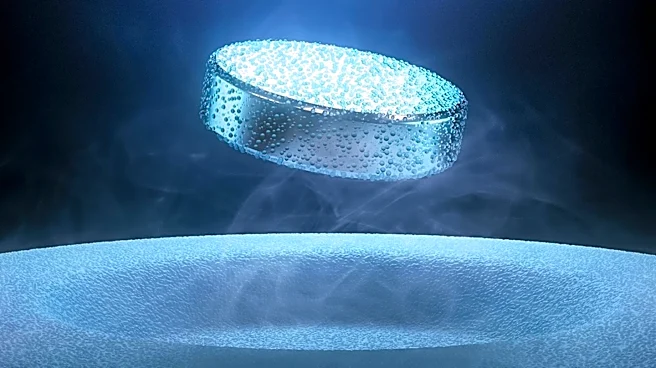
Researchers at Yale University are repurposing tools designed for deep-Earth studies to develop practical superconductors. The team, led by Lisa Pfefferle, is using a Kawai multi-anvil press to simulate extreme pressures found deep within the Earth to create
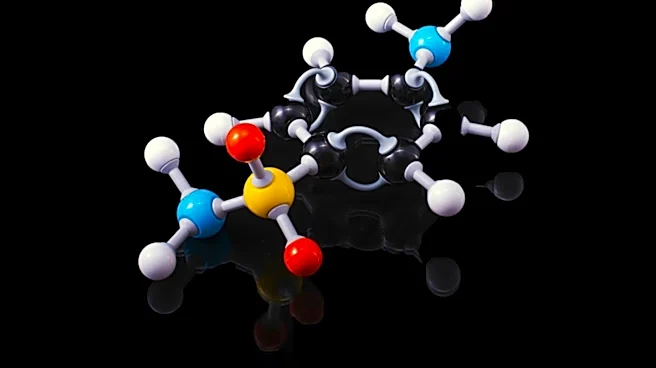
materials that can act as superconductors at normal pressures and relatively high temperatures. The focus is on sulfur trihydride (H3S), a compound that has shown superconductive properties under high pressure. The goal is to stabilize these properties at ambient conditions, which could revolutionize energy transmission and other fields.
Why It's Important?
The development of practical superconductors could have a transformative impact on various industries, including energy, medical imaging, and quantum computing. Superconductors allow for the transmission of electricity without resistance, which could significantly reduce energy loss and improve efficiency. This breakthrough could lead to advancements in technology and infrastructure, providing economic benefits and supporting sustainable development. The research also highlights the interdisciplinary collaboration between geology and materials science, showcasing the potential for innovative solutions to complex scientific challenges.
What's Next?
The Yale research team plans to continue their experiments with H3S and other materials, aiming to achieve stable superconductivity at higher temperatures and lower pressures. They have received a grant from the Naval Research Laboratory to further their work, which will involve collaboration with other institutions and the use of advanced equipment. The success of this research could pave the way for commercial applications and further exploration of superconductivity in other materials, potentially leading to new technologies and industries.