



What's Happening?
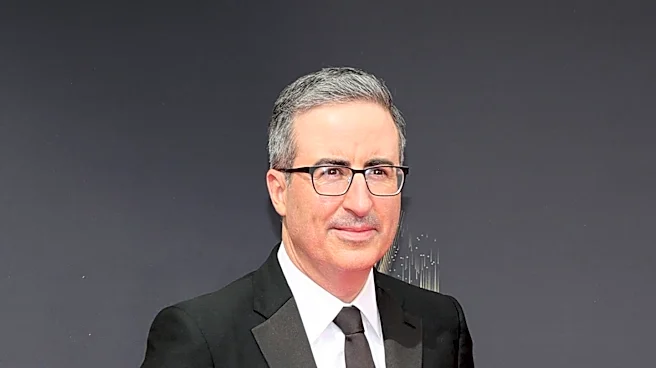
John Oliver, host of HBO's 'Last Week Tonight,' has critiqued Transportation Secretary Sean Duffy's recently released YouTube reality series, 'The Great American Road Trip.' The six-episode show, which chronicles Duffy's seven-month journey across the
U.S. with his wife, Rachel Campos-Duffy, and their nine children, has been met with largely negative reviews. Oliver highlighted concerns regarding the show's sponsorship by companies overseen and regulated by Duffy's department, calling the arrangement 'ethically dubious.' He also mocked the show's content, which he described as an 'expensively produced test run of a Duffy family reality show' with minimal focus on travel or America. Oliver specifically pointed out a controversial moment where Duffy discouraged his daughter from attending Harvard University, citing fears that its teachings would 'pervert and contort' her conservative upbringing. The series faced significant production delays and has garnered low viewership since its release.
Why It's Important?
This critique by John Oliver brings to light potential ethical conflicts and the broader implications of public officials engaging in privately funded media projects that involve entities they regulate. The sponsorship of 'The Great American Road Trip' by companies under the purview of the Department of Transportation raises questions about transparency, influence, and the appropriate boundaries for government officials' outside activities. Such situations can erode public trust in government institutions and create perceptions of impropriety, regardless of intent. Furthermore, the show's content, particularly the comments regarding higher education, reflects a cultural and political divide concerning academic institutions and conservative values. This public discourse, amplified by a prominent satirist like Oliver, can influence public opinion on both the integrity of government officials and the value of diverse educational environments.
What's Next?
The Citizens for Responsibility and Ethics in Washington (CREW) has already filed a complaint with the Department of Transportation's inspector general, requesting an investigation into whether Duffy's involvement in the project violated federal gift, travel, or ethics rules. This complaint, coupled with Oliver's public criticism, could lead to increased scrutiny of Duffy's activities and potentially trigger a formal ethics investigation. Depending on the findings, there could be calls for new guidelines or stricter enforcement of existing regulations concerning public officials' media engagements and their funding sources. The ongoing public discussion may also prompt other government officials to reconsider participating in similar projects, especially those with corporate sponsorships that could be perceived as conflicts of interest. The show's low viewership and negative reception might also deter future attempts by political figures to leverage reality television for public relations.
Beyond the Headlines
The controversy surrounding 'The Great American Road Trip' extends beyond immediate ethical concerns, touching upon the evolving landscape of political communication and the blurring lines between public service and personal branding. In an era where social media and reality television offer direct access to audiences, political figures may increasingly seek alternative platforms to convey messages or build personal brands, potentially bypassing traditional media filters. This trend raises deeper questions about the commercialization of public office and the potential for personal gain to intersect with official duties. The show also highlights a broader cultural tension regarding education and ideology, where institutions like Harvard are viewed by some as ideological threats rather than centers of learning. This narrative contributes to a climate of distrust in established institutions, including academia, and underscores the challenges of fostering intellectual diversity and open dialogue in a polarized society.