



What's Happening?
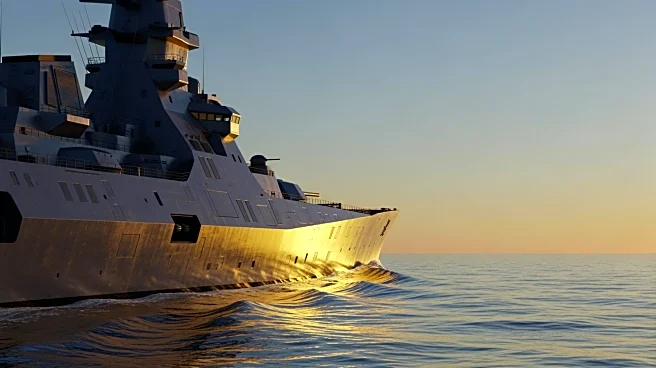
President Donald Trump has announced the construction of a new generation of 'Trump class' battleships as part of his vision for a 'Golden Fleet.' The announcement was made alongside Defense Secretary Pete Hegseth, Navy Secretary John Phelan, and Secretary of State
Marco Rubio. The construction of two vessels is set to begin almost immediately, with plans to expand the fleet to 20 to 25 ships. These battleships are described as the largest and most powerful ever built, featuring advanced weapon systems such as high-powered lasers, nuclear-armed sea-launched cruise missiles, and hypersonic weapons. The initiative is part of a broader strategy to enhance U.S. naval capabilities and address the aging fleet.
Why It's Important?
The construction of the 'Trump class' battleships signifies a major investment in U.S. military capabilities, particularly in naval power. This move is likely to have significant implications for U.S. defense strategy, potentially altering the balance of naval power globally. The focus on advanced weaponry and larger ships reflects a shift towards more aggressive military posturing. This development could impact defense contractors and the broader defense industry, potentially leading to increased government contracts and job creation. However, it may also provoke reactions from other nations, potentially escalating military tensions.
What's Next?
The next steps involve the immediate commencement of construction for the initial two battleships, with further expansion plans in the pipeline. The U.S. Navy will lead the design and construction efforts, with input from President Trump. The administration's focus on enhancing naval capabilities may lead to further military investments and strategic deployments. Additionally, the announcement comes amid increased U.S. naval presence in regions like the Caribbean, suggesting a potential shift in military focus and strategy.
Beyond the Headlines
The decision to build 'Trump class' battleships also highlights President Trump's personal influence on military aesthetics and design, as he has previously expressed dissatisfaction with existing ship designs. This initiative may also reflect broader geopolitical strategies, such as increased pressure on countries like Venezuela, where the U.S. has intensified naval operations. The emphasis on a 'Golden Fleet' could symbolize a broader vision of American military dominance and influence on the global stage.