






What's Happening?
Ducks Unlimited and various conservation organizations in the Pacific Northwest are commending the introduction of the bipartisan Northwest Wetlands Voluntary Incentives Program (VIP) Act in the U.S. House of Representatives. The bill was spearheaded
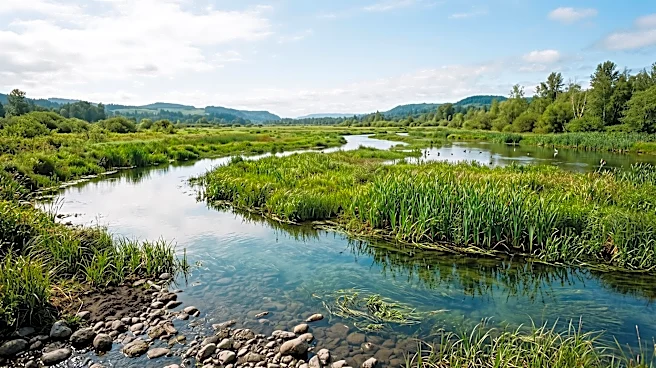
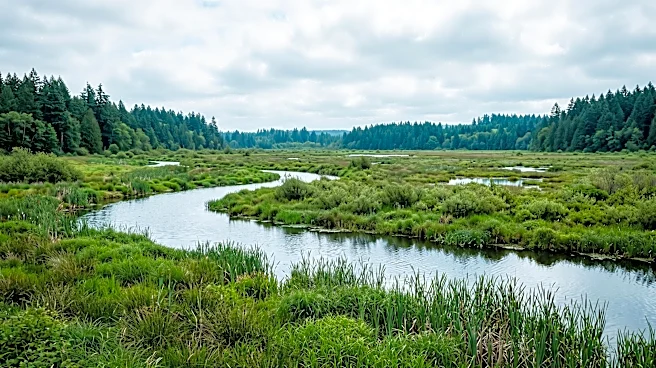
by Representatives Val Hoyle (OR), Ryan Zinke (MT), and Kim Schrier (WA). This legislation aims to establish a new grant program under the U.S. Fish and Wildlife Service (USFWS) to provide essential funding for water infrastructure and on-the-ground habitat needs for waterfowl and migratory birds. The primary focus areas for these conservation efforts are the Columbia River Basin and the coastal regions of Washington and Oregon, which are crucial habitats for breeding and migratory birds, as well as other wildlife like salmon and steelhead. The bill was previously introduced in the Senate as S.1615 by Senator Ron Wyden (D-OR) and Senator Mike Crapo (R-ID). Representative Hoyle emphasized that the bipartisan bill supports habitat restoration and the active management of invasive species across Northwest wetlands, benefiting Tribes, farmers, and local economies, while also strengthening climate resilience.
Why It's Important?
This bipartisan initiative is significant for several reasons, particularly for environmental conservation and regional economies in the Pacific Northwest. The creation of a dedicated grant program will channel much-needed resources to landowners and managers, including farmers and ranchers, to improve water supplies and infrastructure vital for their operations. This not only supports agricultural productivity but also enhances and restores wetland habitats, which are critical for migratory birds and other species. The legislation fosters collaboration among diverse stakeholders, including Tribes, private landowners, and non-profit organizations like Ducks Unlimited, promoting a unified approach to conservation. By investing in wetland infrastructure and habitat restoration, the act aims to bolster climate resilience, ensuring these natural resources are sustained for future generations. The support from a wide array of conservation groups underscores the broad recognition of the bill's potential to deliver multi-faceted benefits for wildlife, communities, and the regional economy.
What's Next?
If passed, the Northwest Wetlands VIP Act will enable direct access to grants for western landowners and managers, facilitating the implementation of water management projects and habitat restoration. These grants will also support partnerships with other eligible recipients, such as Tribes and non-profit organizations. The legislation is expected to lead to tangible improvements in wetland health, benefiting migratory birds, salmon, and steelhead populations. The focus on voluntary incentives means that farmers, ranchers, and local communities will have the tools and resources to actively participate in conservation efforts, integrating environmental stewardship with their economic activities. The bill's bipartisan support in both the House and Senate suggests a strong likelihood of progression, potentially leading to significant long-term investments in the ecological health and economic stability of the Pacific Northwest.
Beyond the Headlines
Beyond its immediate conservation goals, the Northwest Wetlands VIP Act highlights a broader shift towards collaborative and incentive-based environmental policy. By empowering private landowners and local communities through voluntary programs, the legislation acknowledges the critical role they play in large-scale conservation efforts. This approach can foster a sense of shared responsibility for environmental stewardship, moving beyond traditional regulatory frameworks. The emphasis on strengthening climate resilience through habitat restoration also points to a proactive strategy for mitigating the impacts of climate change on vulnerable ecosystems. Furthermore, the bipartisan nature of the bill demonstrates that environmental issues can still serve as common ground for legislative action, even in a politically divided landscape. This could set a precedent for future environmental policies that prioritize cooperation and local engagement.