



What's Happening?
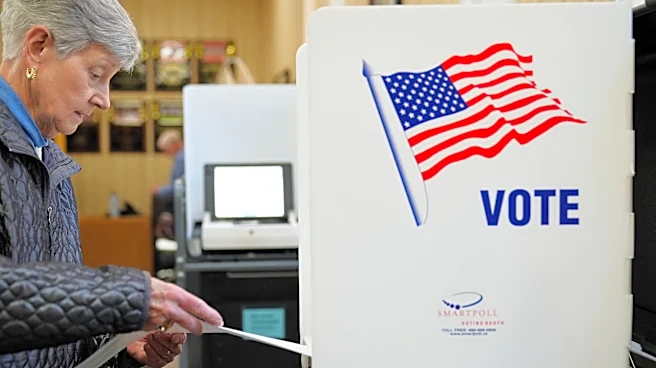
Thousands of students across Maine participated in a mock election this week, casting votes for governor, U.S. House, and U.S. Senate. Historically, the results of these student mock elections have often mirrored the outcomes of the general elections.
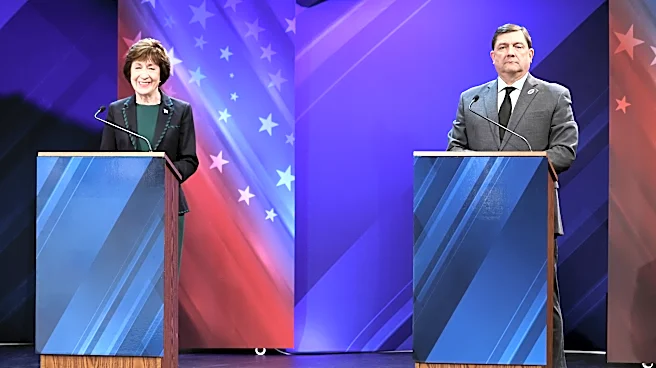
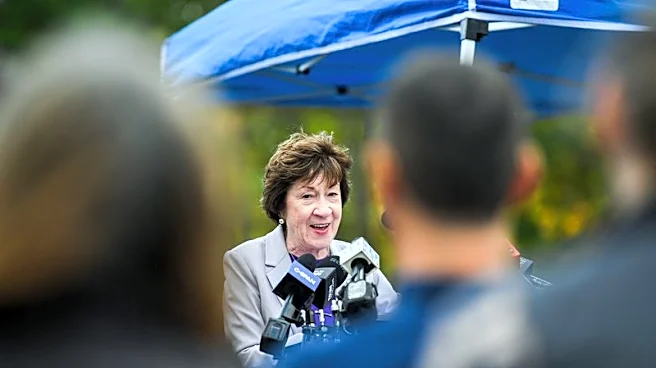
For instance, in previous years, students rejected voter ID and supported a red-flag law referendum, aligning with the decisions of eligible voters. Similarly, the student favorite in presidential elections went on to win in 2016, 2020, and 2024. This year's mock election saw Troy Jackson secure a narrow victory over U.S. Senator Susan Collins, Hannah Pingree win the governorship with a plurality, and U.S. Representative Chellie Pingree achieve a comfortable re-election in the 1st District. However, the Democratic sweep was broken in the 2nd District, where Republican Paul LePage defeated Matt Dunlap.
Why It's Important?
The Maine student mock election serves as an interesting, albeit not always perfectly predictive, barometer of political sentiment among the younger generation and, by extension, potentially the broader electorate. Its historical accuracy in mirroring general election results, particularly in presidential races and referendums, highlights its significance as an educational tool and a potential indicator of future political trends. The participation of thousands of students fosters civic engagement and provides them with a practical understanding of the electoral process. While not always reliable, as evidenced by past discrepancies like students backing a gun background check referendum that failed in 2016, the mock election offers valuable insights into the political leanings and priorities of young Mainers.
What's Next?
The results of this mock election will likely be analyzed by political observers and campaigns, offering a glimpse into the potential dynamics of the upcoming general election. While the mock election has shown predictive power in some instances, its limitations, such as students backing Democrat Sara Gideon in 2020 against Senator Collins who ultimately won, suggest that real-world elections can diverge. The close margins in the mock Senate race, for example, could reflect the tight polling observed in the actual Senate race. The true test of these predictions will come on Election Day, when eligible voters cast their ballots, revealing whether the student preferences align with the final outcomes.
Beyond the Headlines
The consistent participation of Maine students in mock elections underscores the importance of early civic education and engagement. By allowing students to experience the voting process, these exercises aim to cultivate informed and active citizens. The occasional divergence between mock and general election results also provides a valuable lesson in the complexities of political forecasting and the nuances of voter behavior. It highlights that while youth engagement is crucial, various factors, including voter turnout, demographic shifts, and campaign strategies, ultimately shape election outcomes. This initiative contributes to a more politically aware generation, potentially influencing future political landscapes in Maine and beyond.