








What's Happening?
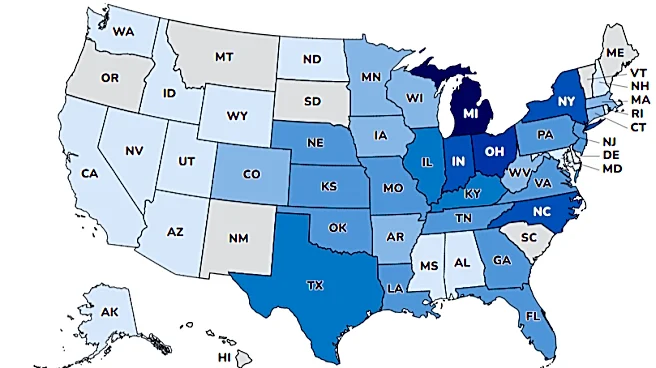
Michigan is grappling with a significant cyclosporiasis outbreak, with over 8,100 cases reported, making it the hardest-hit state in a nine-state outbreak. The outbreak, linked to iceberg lettuce from Taylor Farms and served at Taco Bell, has been exacerbated
by federal funding cuts. These cuts, initiated by the Trump administration in 2025, have reduced Michigan's infectious disease workforce by 23 and county health staff by 123. The state is struggling to manage the outbreak due to limited resources and communication issues with federal agencies. Health officials are borrowing staff from other areas to investigate the outbreak's causes, beyond the identified lettuce link.
Why It's Important?
The outbreak highlights the challenges states face in managing public health crises without adequate federal support. The funding cuts have left Michigan and other states with fewer resources to respond effectively to fast-spreading foodborne illnesses. This situation underscores the importance of federal-state collaboration in public health emergencies. The outbreak's management is crucial for public health safety and could impact consumer confidence in food safety, particularly in the fresh produce sector. The situation also raises concerns about the preparedness of state health systems to handle future outbreaks without sufficient federal backing.
What's Next?
Michigan health officials are focusing on investigating new cases to identify ongoing sources of the outbreak. The U.S. Food and Drug Administration continues to investigate other potential sources of contamination. Meanwhile, Taco Bell has ceased using iceberg lettuce from Taylor Farms nationwide. The state is likely to continue facing challenges in managing the outbreak due to limited resources and communication issues with federal agencies. The situation may prompt calls for a review of federal funding policies for state health departments to ensure better preparedness for future outbreaks.