



What's Happening?
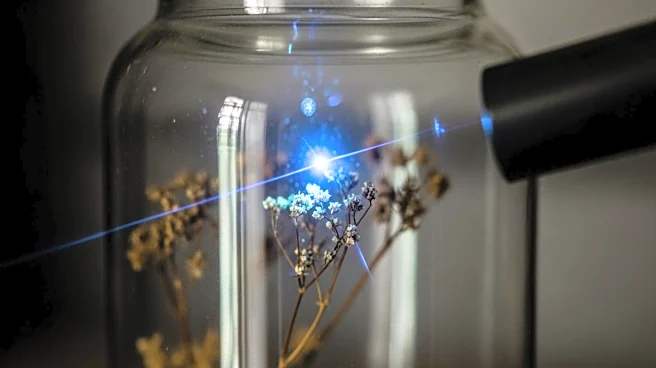
Scientists have employed a technique called spatially offset Raman spectroscopy (SORS) to analyze the preservation fluids in specimen jars from Charles Darwin's Galapagos voyage, stored at London's Natural History Museum. This method allows researchers
to identify the chemical makeup of the fluids without opening the jars, thus preserving the integrity of the specimens. The study revealed that most mammals and reptiles were preserved with formalin and ethanol, while invertebrates were stored in formaldehyde or buffered formaldehyde. This non-invasive technique is crucial for maintaining the condition of these historical specimens, which are invaluable for ongoing scientific research.
Why It's Important?
The use of SORS to analyze Darwin's specimens represents a significant advancement in the preservation of historical biological collections. By identifying the preservation fluids without opening the jars, scientists can better understand and maintain these specimens, which are critical for evolutionary research. This technique has broader implications for museums worldwide, which house millions of fluid-preserved specimens. It offers a way to monitor and care for these collections without risking damage, ensuring their availability for future scientific study. The research underscores the importance of technological innovation in the conservation of cultural and scientific heritage.