



What's Happening?
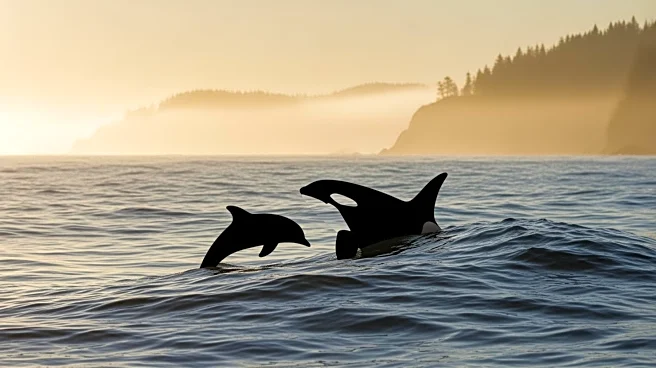
Researchers have documented a rare instance of dolphins and killer whales hunting together off the coast of British Columbia. The study, published in Scientific Reports, reveals that these marine mammals cooperatively hunt for salmon, with dolphins using
echolocation to locate prey and killer whales benefiting from the dolphins' scouting abilities. This behavior was observed through footage captured between August 15-30, 2020, showing the two species diving and foraging in sync. The collaboration appears to offer mutual benefits, with dolphins gaining protection and access to food scraps, while killer whales conserve energy and increase their hunting success.
Why It's Important?
This discovery challenges previous understandings of interspecies interactions in marine environments, highlighting the complex social behaviors of dolphins and killer whales. The cooperative hunting strategy could have implications for marine conservation efforts, as it underscores the importance of preserving diverse ecosystems where such interactions can occur. Understanding these behaviors can also inform strategies to protect these species, which face threats from environmental changes and human activities. The study provides new insights into the adaptive behaviors of marine mammals, which could influence future research and conservation policies.
What's Next?
Further research is needed to determine the consistency and prevalence of this cooperative behavior among other populations of dolphins and killer whales. Scientists may explore whether similar interactions occur in different regions or with other species. The findings could lead to a reevaluation of how marine ecosystems are managed, with a focus on fostering environments that support such beneficial interactions. Researchers will likely continue to monitor these species to gather more data on their social structures and hunting strategies.