






What's Happening?
NASA Goddard has issued a Draft Request for Proposal (DRFP) for the Landsat 10 spacecraft, marking a significant step in the ongoing collaboration with the U.S. Geological Survey (USGS) to capture and distribute multispectral imagery of Earth's landmasses
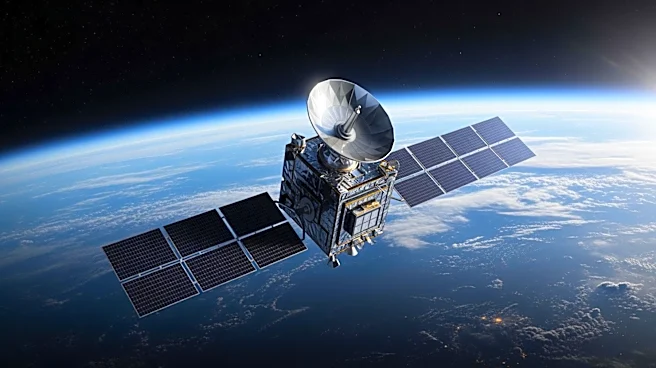
and coastal regions. The DRFP, available for review on SAM.gov since May 18, 2026, invites potential offerors to comment by June 2, 2026. The final Request for Proposal is expected by the end of June 2026, with proposals due approximately 30 days later. Landsat 10, re-architected as a single-observatory mission, will operate in a sun-synchronous, near-polar orbit, ensuring data continuity with its predecessors. The spacecraft will feature advanced autonomy and fault management, supporting a maximum launch mass of 4,000 kilograms, and is designed for a minimum five-year operational life. Upon completion of its on-orbit checkout, operations will transition to the USGS.
Why It's Important?
The release of the DRFP for Landsat 10 underscores the importance of continuous Earth observation capabilities, which are crucial for monitoring environmental changes and supporting research and policy-making. The Landsat program, which began in 1972, provides critical data for understanding natural and human-induced changes on the planet. The new spacecraft will enhance spectral and spatial capabilities, ensuring that researchers and policymakers have access to consistent, freely available data. This development is vital for addressing global challenges such as climate change, resource management, and environmental conservation. The ongoing partnership between NASA and USGS highlights the commitment to maintaining and advancing the technological infrastructure necessary for comprehensive Earth observation.
What's Next?
Following the comment period for the DRFP, NASA Goddard will finalize the Request for Proposal by the end of June 2026. Interested parties will then have approximately 30 days to submit their proposals. The selected contractor will be responsible for the end-to-end design and fabrication of the satellite bus, integration of the Landsat Instrument Suite, and post-launch commissioning. Landsat 10 is expected to launch in 2031, continuing the legacy of the Landsat program. As the project progresses, stakeholders in the scientific and environmental communities will likely monitor developments closely, given the mission's potential impact on global environmental monitoring and policy-making.