





What's Happening?
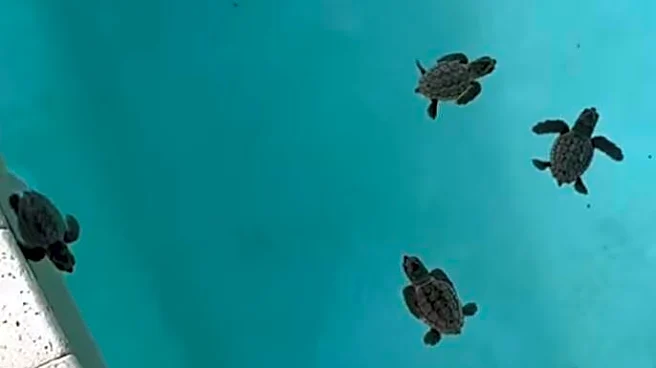
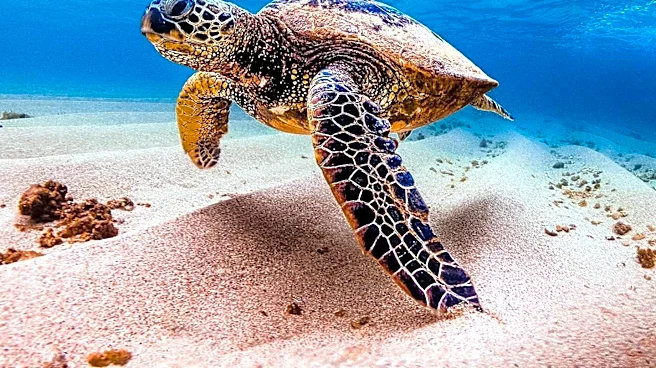
Sea turtles along Florida's Space Coast are suffering injuries from discarded fishing gear, leading to treatment at the Brevard Zoo. Recently, a loggerhead sea turtle died after ingesting fishing line and hooks. Zoo officials report that many injured
turtles are found near fishing piers, where they are attracted by bait. Shannon Gann of the Brevard Zoo noted that turtles are brought in annually due to entanglement or ingestion of discarded fishing materials. Another loggerhead turtle had a flipper entangled in fishing line, which required removal by the medical team. The Brevard Zoo operates a dedicated rehabilitation facility for sea turtles, providing treatment with the goal of releasing them back into the wild. Officials are urging anglers and boaters to properly dispose of their fishing line and gear to prevent further harm to marine life.
Why It's Important?
The issue of discarded fishing gear poses a significant threat to marine ecosystems and wildlife, particularly sea turtles, which are often endangered or threatened species. The incidents at Florida's Space Coast highlight the direct and often fatal consequences of improper waste disposal on marine animals. The Brevard Zoo's continuous efforts to rescue and rehabilitate these turtles underscore the ongoing environmental challenge. The attraction of sea turtles to fishing piers due to bait further exacerbates the problem, creating a dangerous interface between human recreational activities and vulnerable wildlife. This situation impacts biodiversity, conservation efforts, and the overall health of coastal environments, emphasizing the need for greater public awareness and responsible practices among those who engage in fishing activities.
What's Next?
Officials are actively reminding anglers and boaters about the importance of proper disposal of fishing line and other gear. The presence of fishing line recycling tubes throughout the Space Coast offers a practical solution for anglers to safely discard used materials, preventing them from entering the marine environment. Continued public education campaigns and increased accessibility to these recycling facilities will be crucial. The Brevard Zoo will likely continue its rehabilitation efforts, but the long-term solution requires a reduction in the source of the problem through community engagement and adherence to responsible fishing practices. Monitoring the effectiveness of disposal initiatives and the health of sea turtle populations will be ongoing to assess the impact of these measures.
Beyond the Headlines
The recurring injuries to sea turtles from discarded fishing gear reflect a broader environmental challenge related to human impact on marine life. This issue extends beyond immediate physical harm to individual animals, contributing to plastic pollution in oceans and disrupting delicate ecological balances. The problem highlights the ethical responsibility of individuals to protect wildlife and natural habitats. It also points to the need for systemic changes in waste management and product design to minimize environmental harm. The plight of these sea turtles serves as a poignant reminder of the interconnectedness of human actions and environmental health, urging a reevaluation of recreational practices and their ecological footprint.