










What's Happening?
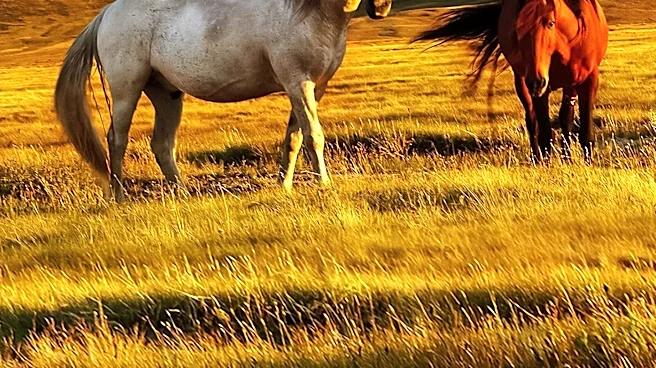
Federal officials have announced a plan to round up and relocate 450 wild horses from the Eastern Sierra region, citing environmental concerns and safety hazards. The operation, set to begin on July 8, involves using helicopters to gather the horses,
which will then be transported to a corral in Modoc National Forest for adoption. This decision follows a federal census indicating that the horse population in the area has grown to approximately 700, far exceeding the land's capacity. The plan has sparked a clash between environmentalists, who support the move to protect the ecosystem, and local tribes and animal advocates, who oppose it. The latter groups argue that the horses are integral to their cultural heritage and dispute claims of ecological damage. A lawsuit filed by a coalition of tribes and advocates seeks to halt the roundup, alleging that federal agencies have not fulfilled their obligations to protect the horses under the Wild Free-Roaming Horses and Burros Act.
Why It's Important?
The planned roundup of wild horses in the Eastern Sierra highlights the ongoing debate over land management and wildlife conservation in the U.S. The decision underscores the challenges faced by federal agencies in balancing ecological preservation with cultural and historical considerations. For environmentalists, the operation is seen as necessary to prevent further damage to the region's delicate ecosystems, which are vital for various species. However, for local tribes and animal rights advocates, the roundup represents a threat to cultural heritage and animal welfare. The outcome of this conflict could set a precedent for how similar situations are handled in the future, impacting policies related to wildlife management and indigenous rights.
What's Next?
The roundup is scheduled to last one to two weeks, but legal challenges could delay or alter the operation. The coalition opposing the roundup plans to appeal a recent court ruling that favored the government, and they may seek an injunction to stop the gather. Meanwhile, discussions about alternative management strategies, such as using birth control to control horse populations, continue. The federal agencies involved have expressed willingness to engage with local tribes and other stakeholders to find a mutually agreeable solution, though tensions remain high.
Beyond the Headlines
The controversy over the wild horse roundup in the Eastern Sierra raises broader questions about the role of federal agencies in managing public lands and wildlife. It also highlights the complex interplay between environmental conservation and cultural preservation. The situation reflects a growing awareness of the need to incorporate indigenous perspectives into land management decisions, as well as the ethical considerations involved in wildlife management practices. As debates over land use and conservation continue, this case may influence future policy decisions and public attitudes toward wildlife and environmental stewardship.