







What's Happening?
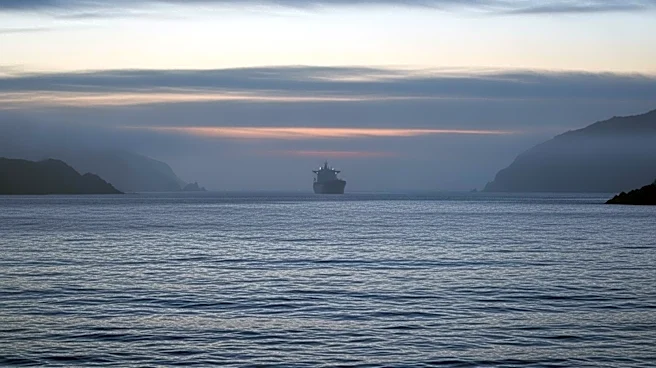
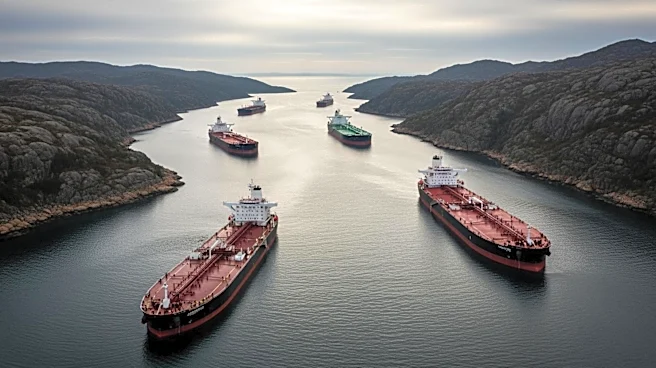
Following the announcement of a US-Iran ceasefire, confusion persists regarding the reopening of the Strait of Hormuz, a critical maritime route for global energy shipping. Despite Iran's assurance of safe navigation, only a limited number of vessels
have passed through the strait, according to ship-tracking data. Iran's Islamic Revolutionary Guard Corps has issued new passage conditions, suggesting alternative routes due to potential sea mines, although these reports remain unconfirmed. Iran's unilateral stance on controlling the strait contradicts the ceasefire agreement, leading to global concern over Iran's plans to charge transit fees, which violates international maritime law.
Why It's Important?
The Strait of Hormuz is a vital chokepoint for global oil and gas trade, and any disruption can have significant implications for international energy markets. Iran's control over the strait and its new passage conditions could lead to increased shipping costs and delays, affecting global supply chains. The situation also highlights geopolitical tensions, as Iran's actions challenge international norms and agreements, potentially leading to further diplomatic and economic conflicts. The uncertainty surrounding the strait's reopening underscores the fragile nature of the ceasefire and the broader implications for regional stability.
What's Next?
The international community is closely monitoring the situation, with potential diplomatic efforts to resolve the confusion and ensure safe passage through the Strait of Hormuz. Stakeholders, including shipping companies and governments, may seek clarification on Iran's new conditions and work towards a resolution that aligns with international maritime law. The ongoing geopolitical tensions could lead to further negotiations or confrontations, impacting global energy markets and regional security dynamics.