



What's Happening?
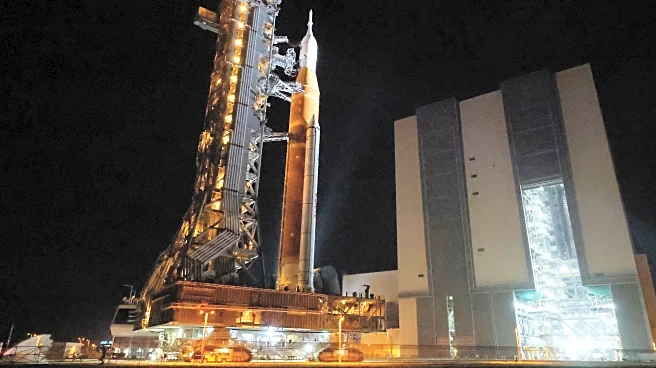
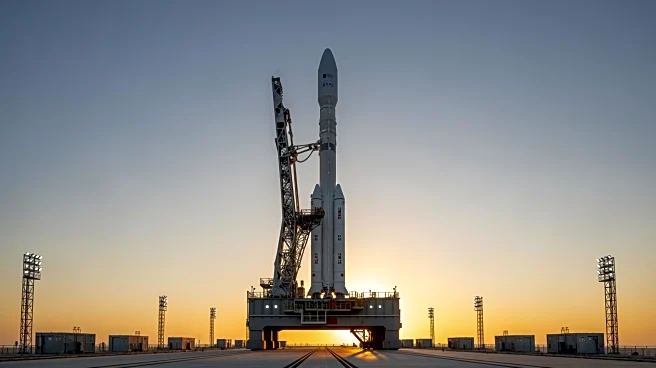
NASA has moved its moon rocket from the hangar to the launch pad at Kennedy Space Center, aiming for an early April launch of the Artemis II mission. This mission will involve four astronauts, including three Americans and one Canadian, who will fly around
the moon without landing. The rocket's journey to the pad was delayed by high winds but completed successfully. The mission has faced delays due to hydrogen fuel leaks and clogged helium lines, which required repairs both at the pad and in the Vehicle Assembly Building. The Artemis program represents NASA's efforts to return humans to the moon, with a planned landing in 2028.
Why It's Important?
The Artemis II mission is a critical step in NASA's long-term goal of establishing a sustainable human presence on the moon and eventually sending astronauts to Mars. Successful completion of this mission will demonstrate the capabilities of the Space Launch System and Orion spacecraft, paving the way for future lunar landings. The mission also highlights international collaboration, with a Canadian astronaut participating. This effort is part of a broader strategy to inspire scientific discovery and technological innovation, potentially impacting industries related to space exploration and research.
What's Next?
If the Artemis II mission launches successfully, it will set the stage for subsequent missions, including Artemis III, which aims to land astronauts on the lunar surface. NASA will continue to address technical challenges and refine its systems to ensure mission success. The agency's focus will also be on developing infrastructure for long-term lunar exploration, including habitats and resource utilization. Stakeholders such as international space agencies and private companies may increase their involvement in lunar exploration efforts, contributing to a growing space economy.
Beyond the Headlines
The Artemis program not only aims to advance space exploration but also seeks to inspire the next generation of scientists and engineers. By showcasing human spaceflight capabilities, NASA hopes to foster interest in STEM fields and encourage educational initiatives. The program also raises ethical and legal questions about space exploration, such as resource rights and international cooperation. As the program progresses, it may influence global space policy and lead to new agreements on lunar exploration and utilization.