


What's Happening?
Recent research has highlighted the potential of madecassic acid, a popular ingredient in Korean skincare, to combat antibiotic-resistant bacteria. The study, published in RSC Medicinal Chemistry, found that madecassic acid may have antibacterial properties,
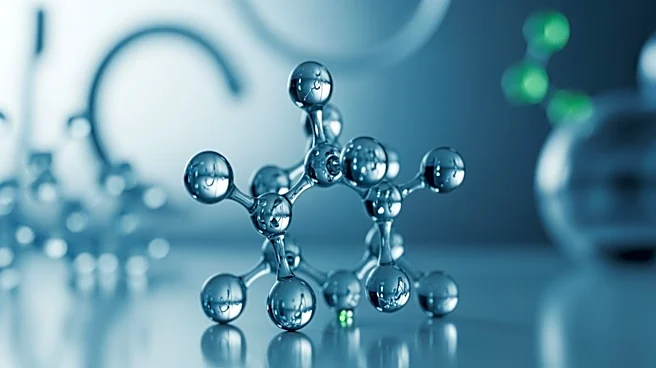
particularly against antibiotic-resistant E.coli. Researchers used computational screening and lab experiments to demonstrate that madecassic acid binds to the respiratory protein complex cytochrome bd, essential for bacterial survival during infection. This binding inhibits the complex's function, potentially killing the bacteria. The study also involved isolating madecassic acid from plant extracts and modifying it to create variants that inhibited bacterial growth. While promising, experts caution that further research is needed before madecassic acid can be used as an antibiotic in healthcare settings.
Why It's Important?
Antimicrobial resistance is a growing global health threat, making infections harder to treat as pathogens become resistant to existing antibiotics. The World Health Organization identifies this resistance as a top public health threat. The discovery of new antibiotics is crucial to outpace resistance, but development is challenging and costly, with many potential antibiotics failing in clinical trials. Madecassic acid's potential offers a new avenue for research, which could lead to sustainable antibiotic production. However, experts emphasize the need for robust antibiotic pipelines to address the evolving resistance mechanisms of microbes. The study's findings could serve as a starting point for further investigation into new antimicrobial strategies.
What's Next?
Further studies are required to determine the efficacy of madecassic acid in humans, including its dosing and safety. Researchers are optimistic about chemically modifying madecassic acid to enhance its medicinal properties. The process of developing new antibiotics is lengthy, involving extensive testing to ensure safety and effectiveness. While the study provides a promising foundation, it will take years before any potential antibiotic derived from madecassic acid could be commercially available. Continued research and investment in antibiotic development are essential to address the growing threat of antimicrobial resistance.