







What's Happening?
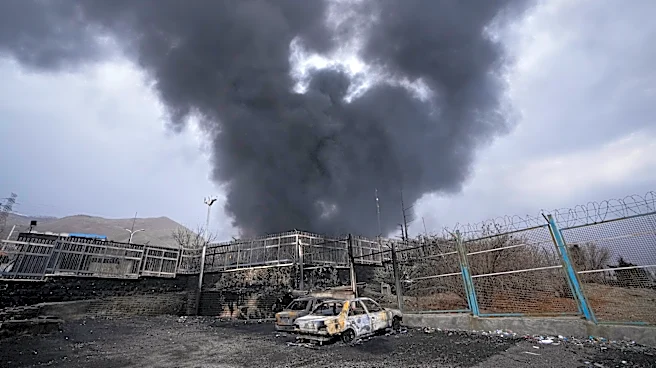
The ongoing conflict involving U.S. and Israeli strikes on Iran has significantly impacted global oil production, leading analysts to predict a supply deficit in 2026. The war has disrupted flows through the Strait of Hormuz, a critical passageway for
global oil consumption, and has resulted in production shut-ins and attacks on energy infrastructure. Analysts expect oil market demand to outpace supply by 750,000 barrels per day on average this year, a stark contrast to previous forecasts of a surplus. The International Energy Agency reports a reduction in oil supply by around 11 million barrels per day as of March, with further disruptions anticipated.
Why It's Important?
The anticipated oil market deficit due to the Iran conflict could lead to increased price volatility and economic uncertainty. The disruption of oil flows through the Strait of Hormuz affects global energy markets, potentially driving up prices and impacting industries reliant on oil. Countries and businesses may face challenges in securing stable energy supplies, leading to broader economic implications. The situation underscores the geopolitical risks associated with energy markets and the need for strategic planning to mitigate potential disruptions.
What's Next?
Efforts to restore oil production to pre-conflict levels are expected to be challenging, with potential permanent losses in capacity. Analysts predict that the market may see its steepest deficit in the second quarter before potentially returning to a surplus later in the year. The resolution of shipping constraints and infrastructure damage will be critical in stabilizing the market. Stakeholders will need to monitor geopolitical developments and adjust strategies to navigate the evolving energy landscape.