





What's Happening?
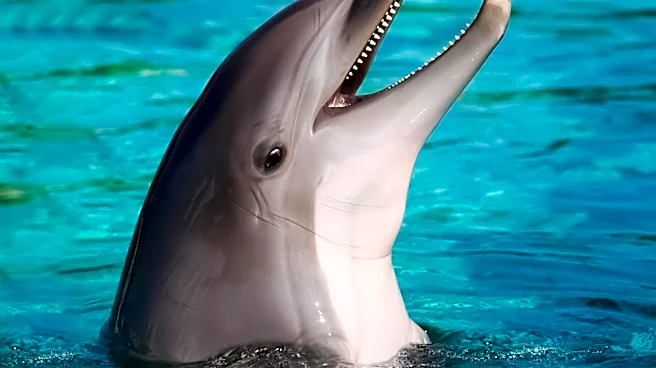
Research indicates that certain animal species, including bottlenose dolphins, African elephants, and spectacled parrotlets, may use individual-specific vocalizations akin to names. In the 1960s, scientists discovered that young bottlenose dolphins develop
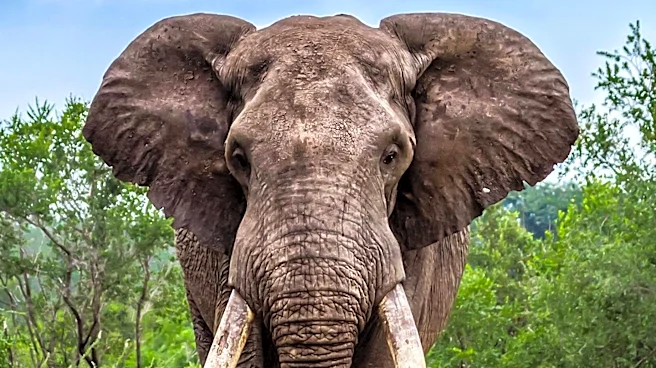
'signature whistles' that they use to identify each other and initiate contact. Playback experiments have shown dolphins respond to their unique whistles, even recognizing them regardless of the whistler's voice. Similarly, a 2023 preprint study suggests wild African elephants use distinct low rumbling sounds to address individuals, with elephants responding more quickly and vocalizing more when their 'name' was played. Spectacled parrotlets also appear to use vocal labels for other parrotlets, and a survey of parrot owners found about half of 800 captive parrots used vocal labels for people and animals in their households. However, the scientific community is still debating the precise definition of 'naming' in animals and whether these vocalizations meet human-centric criteria for names.
Why It's Important?
The potential for animals to use names has significant implications for understanding animal cognition, social structures, and the evolution of language. If animals can assign symbolic vocal labels to individuals, it suggests a higher level of abstract mental representation and self-awareness than previously understood. This research could shed light on the cognitive abilities necessary for complex social interactions and cooperation within animal groups. For instance, species that use name-like calls often share traits like vocal learning abilities and highly social structures, where individuals may frequently be out of sight of their companions. Understanding these behaviors across different lineages could provide insights into how language evolved under various social pressures, offering a comparative framework for studying human language development. Furthermore, if animals possess a sense of self and individuality, it could influence ethical considerations regarding animal welfare and conservation efforts.
What's Next?
Future research will focus on establishing clearer criteria for defining 'names' in the animal kingdom and conducting more rigorous experiments to confirm naming behavior across species. Kelly Jaakkola, a cognitive psychologist, and her colleagues proposed three minimum criteria: individual reference, symbolic representation, and shared meaning. Applying these criteria, bottlenose dolphins currently show the strongest evidence for using animal names, while elephants, parrots, and marmosets require further investigation into symbolic representation. Scientists plan to conduct more playback experiments and observational studies to gather additional evidence, particularly in wild populations, to determine if these vocalizations truly function as names. This systematic approach aims to create a unified framework for discussing naming behavior across diverse species, potentially revealing that such complex communication is more common than currently realized in the animal world.
Beyond the Headlines
The debate over whether animals use names extends beyond mere scientific curiosity, touching upon philosophical questions about consciousness and individuality in non-human species. If animals can name each other, it implies a sophisticated understanding of individual identity and social relationships, challenging anthropocentric views of language and self. This could lead to a re-evaluation of how humans perceive and interact with other species, potentially fostering greater empathy and respect for animal intelligence. The evolution of naming behavior in diverse lineages suggests that the ability to label individuals may be a convergent trait driven by the demands of complex social living, offering clues about the fundamental building blocks of communication. Moreover, understanding these cognitive capacities could inform conservation strategies, as recognizing the intricate social lives of animals might lead to more effective approaches for protecting their habitats and populations.