
What's Happening?
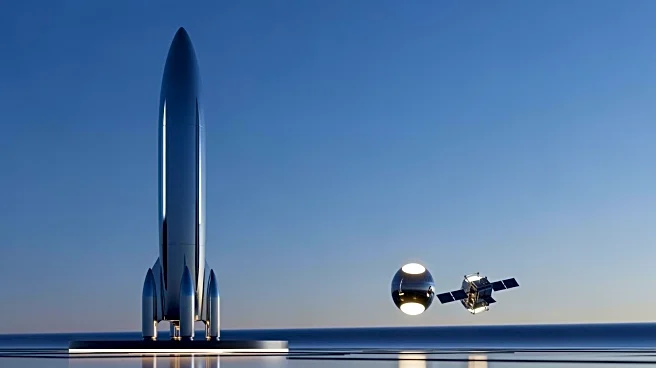
Arianespace is set to launch the first pair of Galileo navigation satellites using the Ariane 6 rocket from Europe's Spaceport in Kourou, French Guiana. The launch is scheduled for December 17 at 12:01
a.m. EST. This mission, known as Galileo Launch 14 (L14), will add two more satellites to the existing constellation of 26 active satellites, which serve as Europe's equivalent to the U.S. Global Positioning System (GPS). The satellites are expected to deploy approximately 3 hours and 20 minutes after liftoff and will undergo a four-month drift and positioning phase before becoming operational.
Why It's Important?
The launch of these satellites is significant for Europe's autonomy in satellite navigation, reducing reliance on non-European launch providers. The Ariane 6 rocket, which has completed four successful flights, is becoming a key player in the heavy-lift launch market. This development enhances Europe's capability to maintain and expand its satellite navigation system, crucial for various applications including transportation, telecommunications, and security. The Galileo system provides precise positioning services, which are vital for both civilian and military operations.
What's Next?
Following the launch, the satellites will undergo a series of checks and positioning maneuvers before they become fully operational. The success of this mission could lead to more frequent use of the Ariane 6 for future satellite launches, further solidifying Europe's position in the global space industry. Additionally, the continued expansion of the Galileo constellation will improve the accuracy and reliability of navigation services provided to users worldwide.