






What's Happening?
India's urban areas are experiencing a significant increase in flood risk due to rapid expansion, inadequate drainage systems, and the degradation of natural water bodies. The country's urban population is projected to nearly double to 951 million by
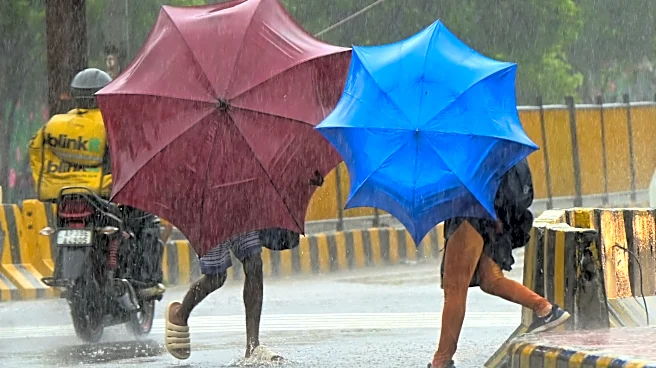
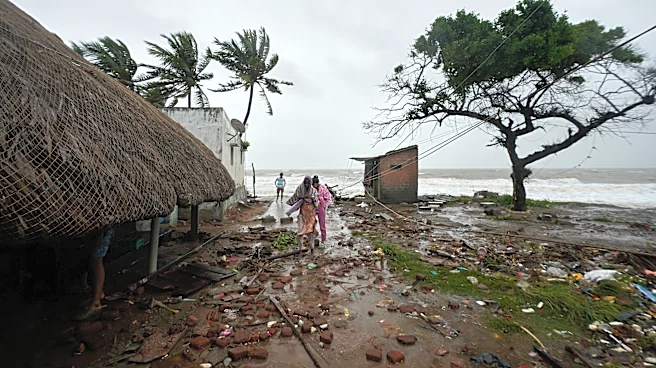
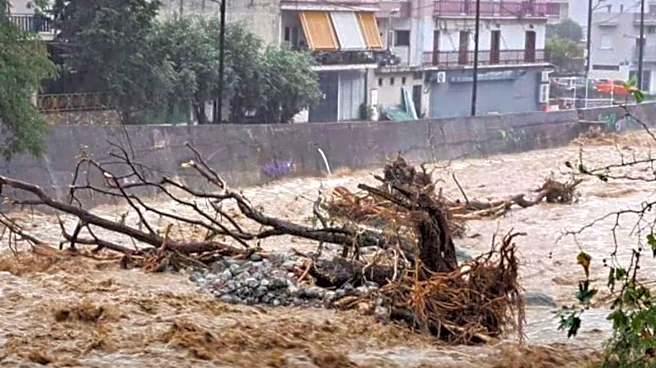
2050, with over half of the necessary urban infrastructure yet to be built. This presents both a challenge and an opportunity to integrate flood resilience into future urban planning. Current urban flooding is attributed to intense rainfall, expanding built-up areas that reduce permeable surfaces, and drainage networks often designed for different rainfall patterns and smaller populations. Natural water systems like lakes, wetlands, and floodplains are losing their capacity to absorb excess water. The responsibility for managing urban flooding is fragmented across various municipal corporations, development authorities, utilities, transport departments, and disaster management institutions, making coordinated efforts essential to prevent risk transfer.
Why It's Important?
The escalating urban flood risk in India has profound implications for its economy, public safety, and quality of life. The World Bank and India’s Ministry of Housing and Urban Affairs estimate current annual losses from urban pluvial flooding at approximately US$4 billion. Without adequate adaptation measures, these losses are projected to reach US$5 billion by 2030 and between US$14 billion and US$30 billion by 2070. This financial burden will strain public resources and hinder economic growth. More critically, vulnerable communities often bear the brunt of these disasters, facing significant impacts on their lives and livelihoods. Integrating flood resilience into urban planning is crucial to protect these populations, ensure the continuity of essential services, and safeguard economic assets, thereby fostering sustainable urban development.
What's Next?
To address the growing flood risk, India needs to prioritize three key areas. First, cities must conduct regularly updated flood-risk assessments that incorporate changing rainfall patterns and climate projections to identify vulnerable areas and exposed communities. Second, urban planning needs to integrate engineering solutions with nature-based approaches, such as restoring lakes and wetlands, protecting floodplains, and utilizing rainwater-retention parks and permeable surfaces. This approach aims to manage water across the urban landscape rather than solely relying on drainage networks. Third, there is a need to improve data utilization through enhanced rainfall forecasting, early-warning systems, and real-time monitoring, coupled with stronger institutional coordination and clear communication with residents regarding evacuation routes and essential services. Investment decisions should also account for future losses prevented over the full lifecycle of flood-management projects.
Beyond the Headlines
The challenge of urban flooding in India extends beyond immediate infrastructure and planning issues, touching upon deeper ethical and governance dimensions. The current fragmented management structure often leads to uncoordinated decisions that can inadvertently transfer flood risk to other areas or communities. There is an ethical imperative to ensure that investment decisions prioritize the protection of vulnerable communities, whose needs might otherwise be overlooked due to weaker immediate commercial returns. The long-term shift required is to embed flood risk as a routine input into all land-use decisions, infrastructure planning, and investment appraisals. This proactive approach, rather than reactive responses, is vital to avoid creating new exposures that will be far more costly and complex to correct in the future, ultimately shaping the resilience and sustainability of India's urban future.