




What's Happening?
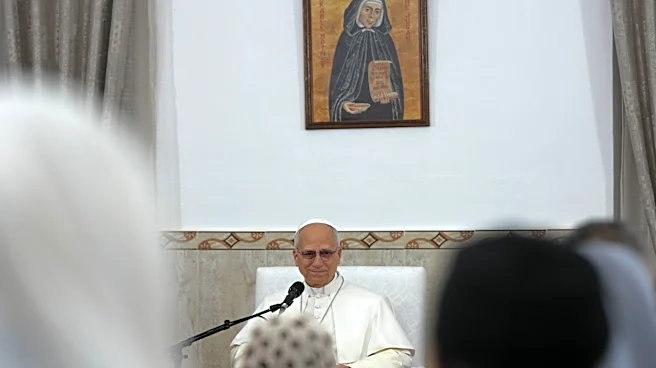
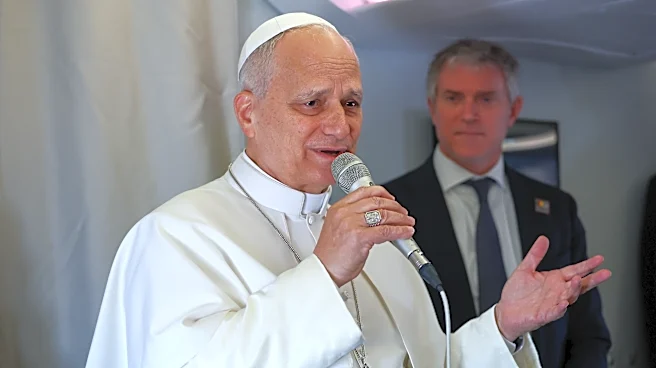
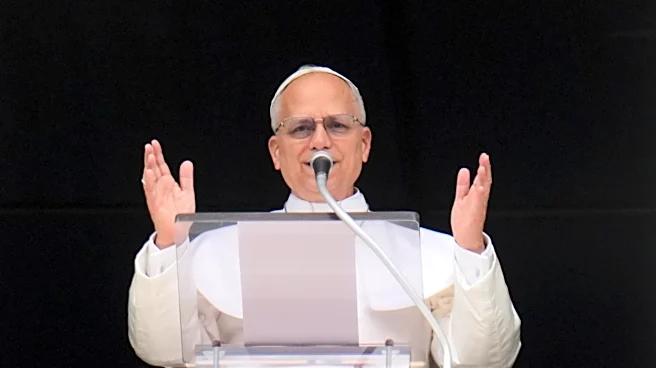
Pope Leo XIV has arrived in Cameroon, where he addressed President Paul Biya and government officials, emphasizing the need to combat corruption in the country. During his speech at the presidential palace, the Pope highlighted the importance of breaking
the 'chains of corruption' to restore credibility and justice. This visit comes after Biya's contested re-election, which secured him an eighth term in office. The Pope's visit is part of a broader tour of Africa, focusing on promoting peace and justice. He is scheduled to participate in a 'peace meeting' in Bamenda, a region affected by separatist violence. The Pope's message also included a call for transparency in public finances and the integration of civil society into governance.
Why It's Important?
The Pope's visit to Cameroon is significant as it brings international attention to the issues of corruption and governance in the country. Cameroon, rich in natural resources, has faced criticism for the unequal distribution of wealth, with revenues from extraction rarely benefiting local communities. The Pope's call for transparency and accountability could pressure the government to implement reforms. Additionally, his visit may encourage dialogue and peace efforts in regions affected by separatist violence. The Pope's emphasis on the role of youth and women in societal change highlights the potential for grassroots movements to influence national policies.
What's Next?
Following the Pope's visit, there may be increased pressure on the Cameroonian government to address corruption and engage in dialogue with separatist groups. The 'peace meeting' in Bamenda could serve as a platform for initiating discussions aimed at resolving ongoing conflicts. The international community may also monitor the situation more closely, potentially leading to diplomatic interventions or support for peacebuilding initiatives. The Pope's visit could inspire civil society organizations to advocate more vigorously for transparency and equitable resource distribution.
Beyond the Headlines
The Pope's visit underscores the ethical and moral dimensions of leadership and governance. His message resonates with broader themes of social justice and the responsibility of leaders to serve their people. The emphasis on transparency and accountability aligns with global movements advocating for good governance and anti-corruption measures. The visit also highlights the role of religious leaders in influencing political discourse and promoting peace in conflict-affected regions.