


What's Happening?
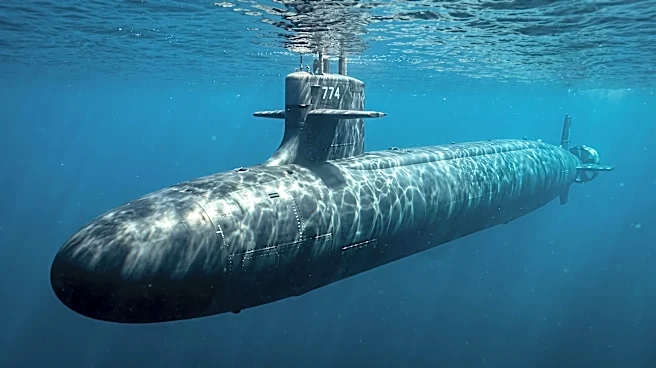
The U.S. Virginia-class submarine Colorado is slated to become the inaugural submarine assigned to Submarine Rotational Force-West (SRF-West), commencing late next year. This initiative is a key component of the trilateral AUKUS agreement, established
in 2021 between the United States, the United Kingdom, and Australia. Rear Adm. Chris Cavanaugh, commander of Submarine Forces for the U.S. Pacific Fleet, stated that the AUKUS agreement is on schedule and, in some aspects, even ahead of schedule. The USS Colorado recently completed a month-long maintenance period in Australia and will return next year to establish SRF-West at the Royal Australian Navy base HMAS Stirling. The reactivation of Submarine Squadron 3 in the spring is also in support of standing up SRF-West, which aims to provide a rotational presence of nuclear-powered fast-attack submarines from the U.S. (up to four) and the UK (one) at HMAS Stirling. This development is part of Pillar I of the AUKUS deal, which focuses on providing Australia with Virginia-class nuclear-powered submarines by 2032.
Why It's Important?
The deployment of the USS Colorado and the establishment of SRF-West signify a significant advancement in the AUKUS security pact, enhancing the collective undersea advantage of the three nations. This move strengthens military interoperability and presence in the Indo-Pacific region, a critical area for global security and trade. For the U.S., it reinforces its commitment to regional allies and its strategy of projecting power and maintaining stability. The rotational presence of nuclear-powered submarines provides a robust deterrent against potential adversaries and contributes to a more secure maritime environment. Furthermore, the agreement fosters technological collaboration under Pillar II, where the nations are jointly developing and fielding advanced military capabilities, which could lead to significant advancements in defense technology and strategy for all parties involved. This initiative also provides Australia with crucial experience and infrastructure development necessary for its future sovereign nuclear-powered submarine fleet.
What's Next?
The USS Colorado is expected to return to HMAS Stirling at the end of next year to officially establish SRF-West. This will mark the beginning of a continuous rotational presence of U.S. and UK nuclear-powered submarines in Australia. Further progress is anticipated in Pillar I, with Australia slated to receive its first Virginia-class nuclear-powered submarines by 2032. Concurrently, efforts under Pillar II will continue, focusing on the joint development and deployment of advanced military capabilities. The ongoing upgrades to HMAS Stirling, including the construction of a new Submarine Training Centre and enhanced shore power capabilities, are crucial next steps to support these operations. These infrastructure developments and training programs will be vital for Australia to build the necessary workforce and expertise to maintain and operate nuclear-powered submarines safely and effectively.
Beyond the Headlines
The AUKUS agreement, particularly the establishment of SRF-West, represents a long-term strategic shift in regional security dynamics. Beyond the immediate military implications, it signifies a deeper integration of defense industrial bases and technological sharing among the U.S., UK, and Australia. This collaboration could set a precedent for future multilateral defense initiatives, fostering a more interconnected and resilient alliance network. The transfer of nuclear propulsion technology, while strictly adhering to non-proliferation commitments, also raises complex questions about the future of nuclear technology sharing and its impact on global arms control regimes. The success of AUKUS will likely influence how other nations perceive and pursue their own defense modernization efforts, potentially leading to a recalibration of power balances in the Indo-Pacific and beyond. The ethical and legal frameworks surrounding the operation and maintenance of nuclear-powered vessels in allied territories will also continue to evolve.