


What's Happening?
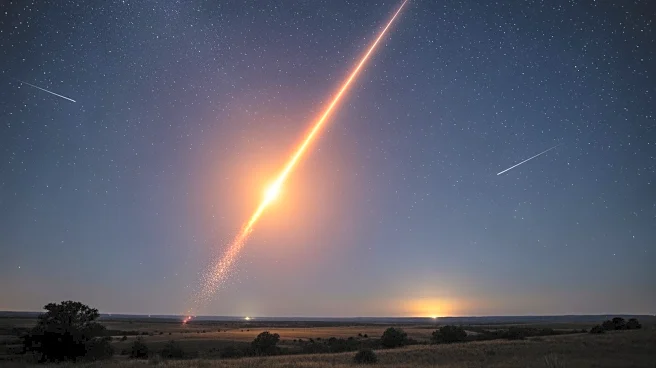
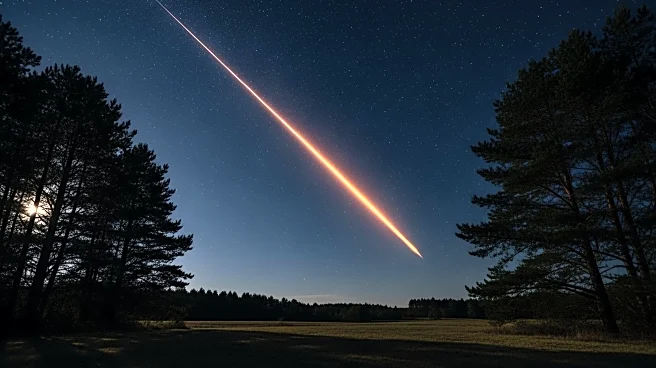
A meteor was observed streaking across the skies of southeastern Texas, with several residents in the Greater Houston area capturing the event on their dashboard and doorbell cameras. The fireball, confirmed by NASA, created a spectacle as it illuminated
the night sky. This celestial event occurred on March 22, 2026, and quickly became a topic of interest among local communities and space enthusiasts. The sighting adds to the list of recent astronomical phenomena that have captivated public attention, highlighting the ongoing interest in space-related events.
Why It's Important?
The meteor sighting over Texas underscores the increasing accessibility of astronomical events to the general public, thanks to the proliferation of personal recording devices like dashboard and doorbell cameras. Such events not only spark public interest in space and science but also contribute to citizen science, where everyday people can participate in scientific observation and data collection. This particular sighting may encourage more individuals to engage with astronomy and support educational initiatives aimed at increasing public understanding of space phenomena. Additionally, it highlights the importance of NASA's role in confirming and studying such events, which can have implications for understanding the composition and behavior of meteors entering Earth's atmosphere.
What's Next?
Following the meteor sighting, NASA and other scientific organizations may analyze the footage and data collected by residents to gain insights into the meteor's trajectory, size, and composition. This analysis could contribute to broader research efforts aimed at understanding meteors and their potential impact on Earth. Public interest generated by the event might lead to increased participation in local astronomy clubs and educational programs, fostering a greater appreciation for space science. Additionally, the event may prompt discussions on the importance of monitoring near-Earth objects and the potential need for developing strategies to mitigate any future threats posed by larger celestial bodies.