




What's Happening?
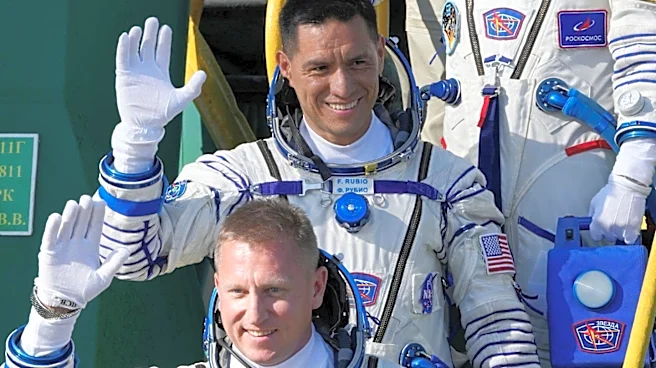
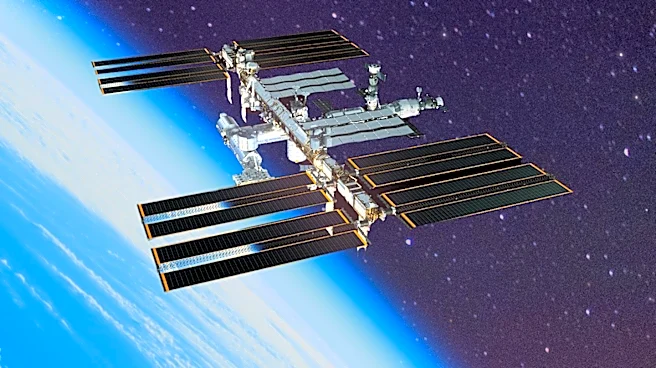
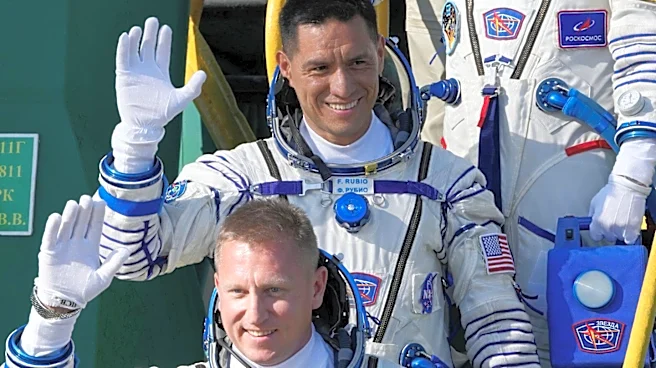
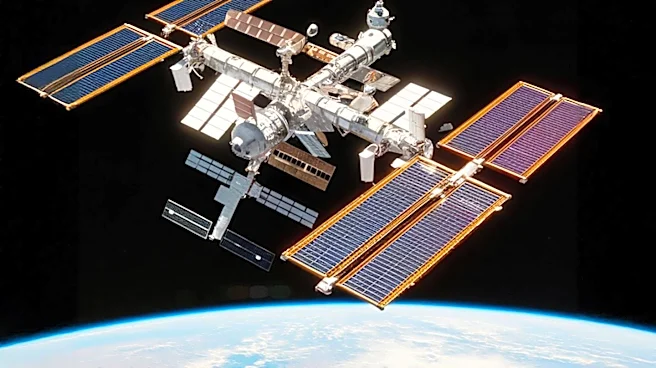
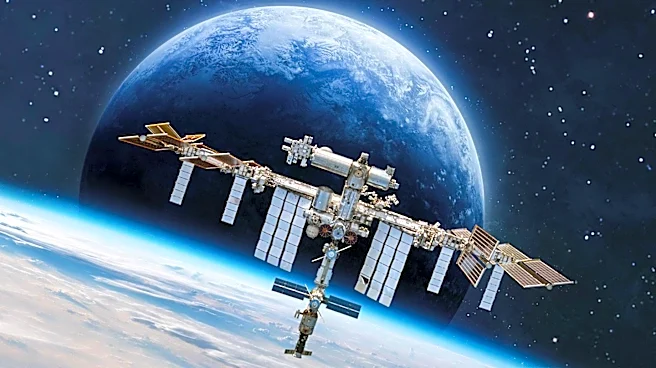
NASA astronaut Chris Williams has returned to Earth after completing a 241-day mission aboard the International Space Station (ISS). Williams, along with Roscosmos cosmonauts Sergey Kud-Sverchkov and Sergei Mikaev, landed safely in Kazakhstan on July
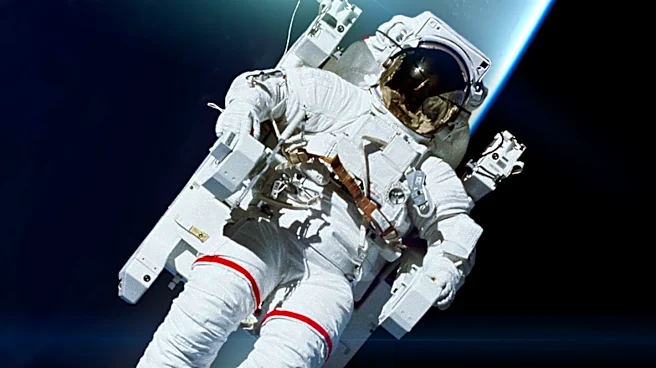
26, 2026. During their mission, the crew completed 3,856 orbits of Earth and traveled over 102 million miles. Williams participated in various scientific studies, including research that could lead to new cancer treatments and advancements in materials production for high-performance computers and electronics. He also conducted two spacewalks to upgrade the station's electrical power system and repair the Canadarm2 robotic arm.
Why It's Important?
The successful completion of this mission underscores the critical role of the ISS in advancing scientific research and technology development. The experiments conducted by Williams and his team have potential implications for medical advancements and technological innovations on Earth. Furthermore, the mission contributes to NASA's ongoing efforts to prepare for future human exploration of the Moon and Mars. The continuous human presence on the ISS for over 25 years has facilitated breakthroughs that are not possible under Earth's conditions, highlighting the importance of space research in addressing global challenges.
What's Next?
Following their return, the crew will undergo medical evaluations and travel to Karaganda, Kazakhstan, before Williams heads to NASA's Johnson Space Center in Houston. The research conducted during the mission will be analyzed to further understand its implications for future space missions and Earth-based applications. NASA continues to focus on preparing for the Artemis program, which aims to return humans to the Moon and eventually conduct missions to Mars, leveraging the knowledge gained from ISS missions.
Beyond the Headlines
The mission highlights the collaborative efforts between NASA and international partners like Roscosmos, emphasizing the importance of global cooperation in space exploration. The advancements in cancer research and materials production aboard the ISS could lead to significant improvements in healthcare and technology sectors, demonstrating the broader impact of space missions on society.