
What's Happening?
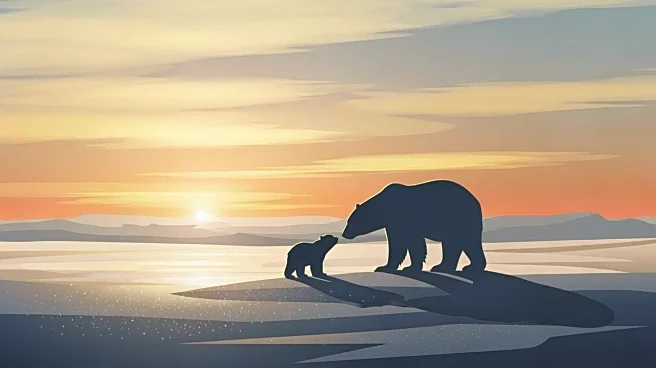
Researchers in northern Canada have documented a rare instance of polar bear adoption, capturing video footage of a female polar bear caring for a cub that was not her own. This event was observed during
the annual polar bear migration along the Western Hudson Bay in Churchill, Manitoba. The mother bear was initially seen with one tagged cub, but later, researchers noticed a second, untagged cub with her. This adoption is one of only 13 documented cases in the study population over 45 years. The cubs, both around 10 to 11 months old, are expected to stay with their adoptive mother until they are about 2.5 years old. The adoption increases the chances of the cub's survival into adulthood, as having a maternal figure is crucial for their development.
Why It's Important?
This rare adoption event underscores the adaptability and maternal instincts of polar bears, which are crucial for the species' survival amid environmental challenges. Polar bears are listed as a vulnerable species, with climate change and sea ice loss posing significant threats to their survival. The adoption not only highlights the bears' social behaviors but also provides hope for their resilience. The presence of a caring mother significantly improves the survival odds of cubs, which face a 50% chance of reaching adulthood in the wild. This event also draws attention to the broader implications of climate change on wildlife, emphasizing the need for conservation efforts.
What's Next?
Researchers will continue to monitor the adopted cub and its new family as they prepare to head out to sea ice, where the cubs will learn essential survival skills from their mother. The team is also attempting to identify the biological mother of the adopted cub through genetic samples. This ongoing research will contribute to understanding polar bear behaviors and the impacts of environmental changes on their populations. Conservationists may use this data to advocate for policies aimed at mitigating climate change effects and protecting vulnerable species like polar bears.