







What's Happening?
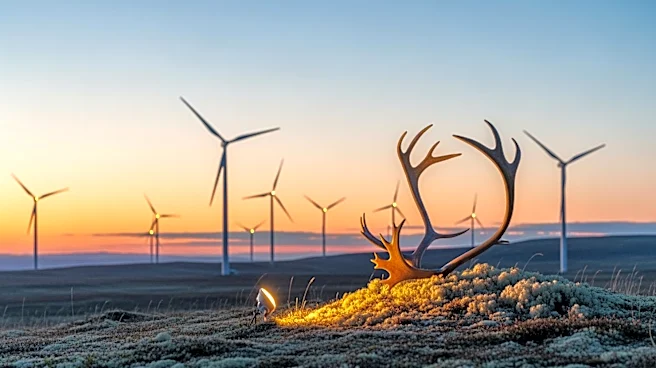
The Norwegian government is facing legal challenges from the Sámi Parliament over its green energy projects, which include wind farms and electrification plans on Sámi land. The Sámi Parliament argues that the government has failed to consult the Indigenous
Sámi people adequately, as required by existing legal frameworks. The projects are part of Norway's efforts to meet its Paris Agreement targets, but critics claim they may disrupt the ecological balance and cultural continuity of the Sámi people. Equinor's proposal to electrify the Melkøya LNG processing plant and the development of new wind power projects are central to these plans. Norwegian Prime Minister Jonas Gahr Støre has stated that these initiatives could significantly reduce national emissions, but environmental groups have raised concerns about potential greenwashing.
Why It's Important?
The legal challenge highlights the tension between environmental goals and Indigenous rights. Norway's approach to meeting its climate targets is seen as a model internationally, but the Sámi Parliament's opposition underscores the need for inclusive and respectful environmental policies. The outcome of this legal dispute could set a precedent for how Indigenous rights are integrated into national climate strategies. If the Sámi Parliament succeeds, it may prompt Norway and other countries to reassess their consultation processes with Indigenous communities, potentially influencing global environmental policy and Indigenous rights advocacy.
What's Next?
The legal appeal by the Sámi Parliament is ongoing, and its resolution could impact future energy projects in the region. If the Sámi Parliament's challenge is successful, Norway may need to revise its consultation processes and project plans to better accommodate Indigenous rights. This could delay or alter the implementation of planned wind farms and electrification projects. Additionally, international attention on this case may influence other countries to examine their own practices regarding Indigenous consultation in environmental projects.
Beyond the Headlines
The situation raises broader questions about the ethical implications of green energy projects on Indigenous lands. It challenges the notion of 'green colonialism,' where environmental initiatives may inadvertently harm Indigenous communities. The case could lead to a reevaluation of how environmental justice is defined and pursued, ensuring that Indigenous voices are central to climate action plans. Long-term, this could foster more equitable and sustainable approaches to achieving global climate goals.