



What's Happening?
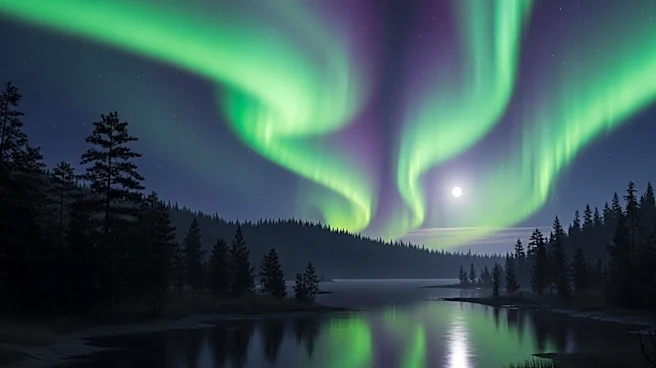
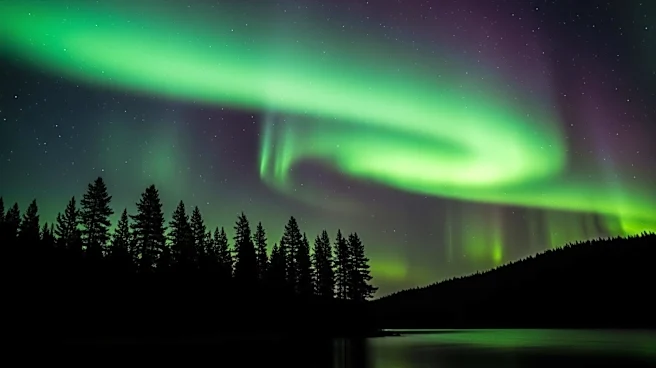
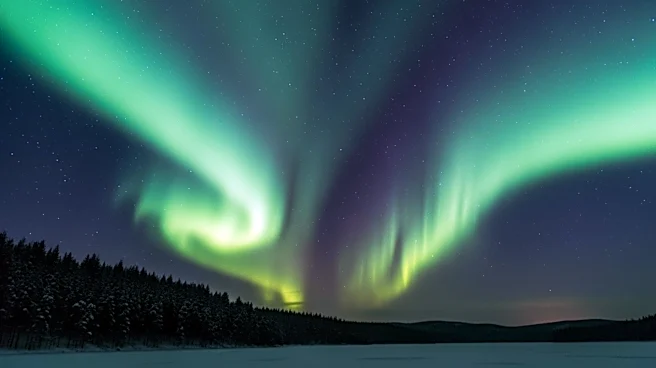
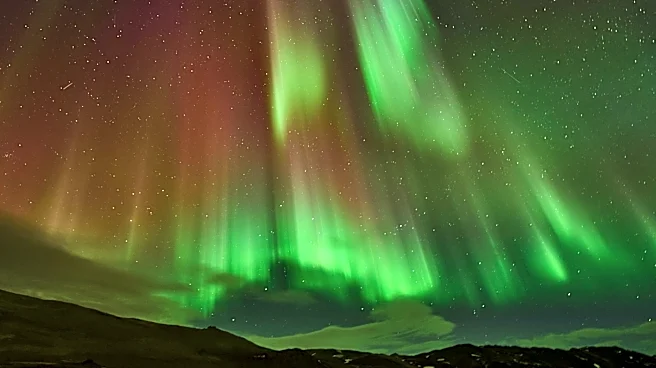
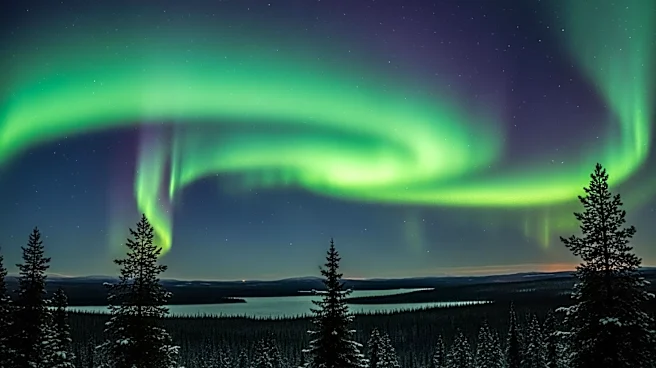
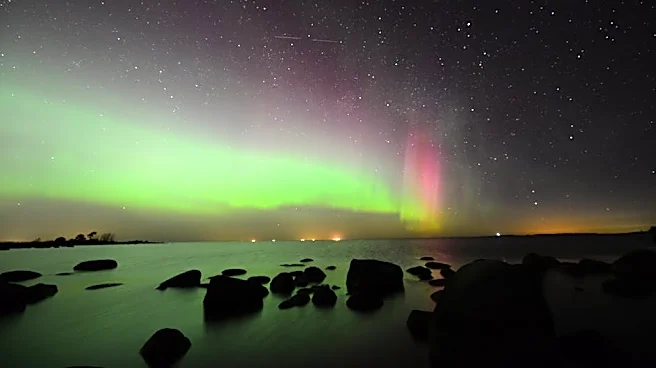
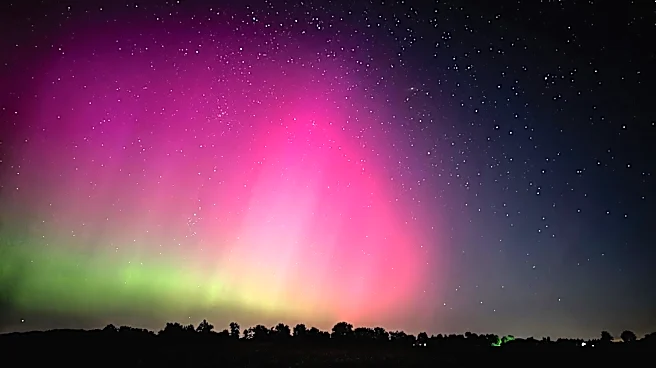
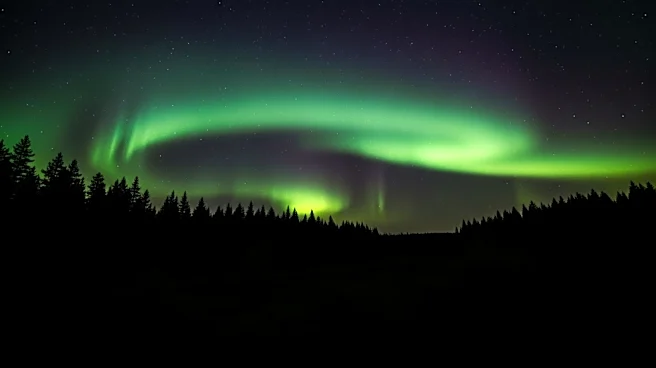
A geomagnetic storm is expected to make the aurora borealis visible across parts of the United States this weekend, extending beyond its usual northern boundaries. Typically seen in regions like Alaska and northern Canada, the northern lights may be visible in the northern tier
of the U.S. due to heightened solar activity. The best chances for viewing are in states such as Alaska, Washington, Idaho, Montana, North Dakota, South Dakota, Minnesota, Wisconsin, Michigan, and Maine. If the storm intensifies, the aurora could be seen as far south as Oregon, Wyoming, Nebraska, Iowa, Illinois, Indiana, Ohio, New York, Vermont, and New Hampshire. The aurora borealis occurs when charged particles from the sun collide with gases in the Earth's upper atmosphere, releasing energy as light. This weekend's event is driven by a high-speed stream of solar wind from a coronal hole on the sun.
Why It's Important?
This event provides a rare opportunity for millions of Americans to witness the northern lights without traveling to Arctic regions. The phenomenon is not only a spectacular natural display but also a reminder of the dynamic interactions between the sun and Earth. For those in the northern U.S., this could be a unique chance to experience a natural wonder that is typically out of reach. The event also highlights the importance of understanding space weather and its potential impacts on Earth, including disruptions to communication systems and power grids.
What's Next?
Observers hoping to catch a glimpse of the aurora should plan to view the lights late in the evening through early morning, particularly between 10 p.m. and 2 a.m. local time. Clear skies are essential, as cloud cover can obstruct the view. Those interested should find a location away from city lights to maximize visibility. The event underscores the need for continued monitoring of solar activity and its effects on Earth, which can have broader implications for technology and infrastructure.