




What's Happening?
The Cayuga County Department of Planning and Economic Development is hosting its second StormwaterSmart Workshop, focusing on reducing household food waste and promoting composting. The event, held at the Cayuga County Natural Resource Center, includes
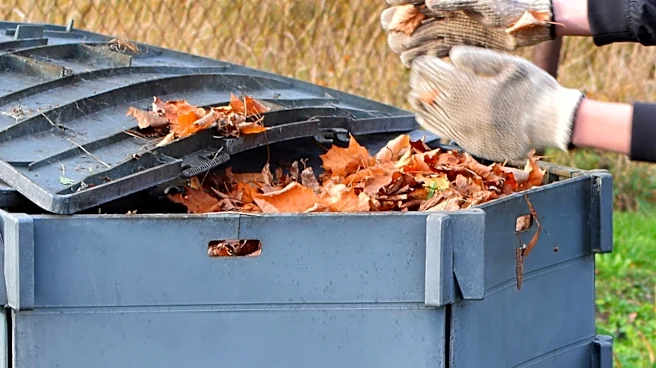
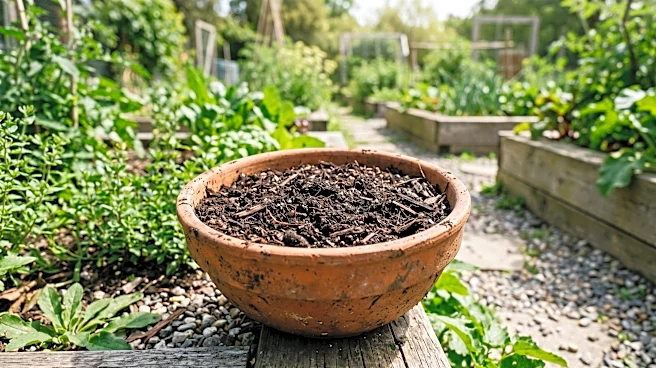
a presentation on food waste reduction, a live composting demonstration, and practical tips for protecting water quality at home. Registered participants will receive giveaways, and free compost bins are available to Cayuga County residents, limited to one per household. This additional workshop was scheduled due to remaining bins after the initial session. Composting is highlighted as a method to divert material from landfills, create a free soil amendment, and help soil retain water. The workshop aims to educate residents on sustainable practices and provide resources for at-home composting.
Why It's Important?
This initiative by the Cayuga County Department of Planning and Economic Development is important for several reasons. Firstly, it directly addresses the issue of food waste, which constitutes a significant portion of the U.S. food supply, with estimates suggesting 30-40% is wasted. By promoting composting, the county is actively working to divert organic materials from landfills, thereby reducing methane emissions, a potent greenhouse gas. Secondly, the program empowers residents with practical knowledge and resources, such as free compost bins, to adopt environmentally friendly practices at home. This not only benefits individual households by providing nutrient-rich soil amendments but also contributes to broader environmental health by improving soil quality and reducing the need for chemical fertilizers. The focus on water quality protection further underscores the comprehensive environmental benefits of such community-led sustainability efforts.
What's Next?
Following this workshop, Cayuga County residents who attended will be equipped with the knowledge and tools to begin or enhance their home composting efforts. The provision of free compost bins is expected to encourage immediate adoption of composting practices among participants. The county may monitor the impact of these workshops on local waste diversion rates and potentially plan future sessions or expand the program based on community engagement and success. Continued public awareness campaigns and educational resources could further support residents in their composting journey. The success of this initiative could also serve as a model for other counties looking to implement similar food waste reduction and composting programs, fostering a wider adoption of sustainable waste management practices across the state and potentially the nation.
Beyond the Headlines
The Cayuga County composting workshop reflects a growing national trend towards localized environmental initiatives aimed at sustainable living and waste reduction. Beyond the immediate benefits of diverting waste and improving soil, such programs foster a sense of community responsibility and environmental stewardship. They highlight the shift from a linear 'take-make-dispose' economy to a more circular one, where waste is viewed as a resource. Ethically, these programs underscore the importance of individual actions in addressing larger environmental challenges like climate change and resource depletion. Culturally, they can lead to a greater appreciation for natural cycles and a more conscious approach to consumption and waste generation. The long-term implications include healthier ecosystems, reduced reliance on synthetic fertilizers, and a more resilient local food system, all contributing to a more sustainable future.