

What's Happening?
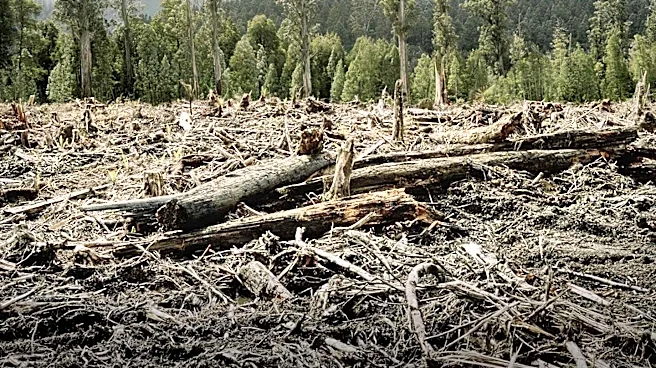
In British Columbia, activists are blocking logging roads to prevent the cutting of old-growth forests on Vancouver Island. These forests, some of the rarest ecosystems on Earth, are under threat from logging activities. The protesters, including First
Nations elders, are camping out to stop logging trucks, highlighting the ongoing conflict over land use and conservation. The province claims to have deferred or protected millions of hectares of old growth, but critics argue these measures are temporary. The logging industry remains a significant economic driver, complicating efforts to protect these ancient forests.
Why It's Important?
The conflict over old-growth logging in British Columbia underscores the tension between economic development and environmental conservation. These forests are crucial for carbon storage and biodiversity, making their preservation vital in the fight against climate change. The protests draw attention to the need for sustainable forestry practices and the importance of Indigenous rights in land management. The outcome of this conflict could influence forestry policies and conservation efforts not only in Canada but also in other regions facing similar challenges.
What's Next?
As the logging deferrals are set to expire, the British Columbia government faces pressure to negotiate long-term agreements with Indigenous communities. The outcome of these negotiations could determine the future of old-growth logging in the region. Activists are likely to continue their efforts, potentially leading to further legal and political battles. The situation also raises questions about the role of government in balancing economic interests with environmental and cultural preservation.