






What's Happening?
The World Health Organization has reported four new human infections of the H9N2 avian influenza in China, adding to a growing number of cases this year. Despite these developments, the Centers for Disease Control and Prevention (CDC) assesses the risk
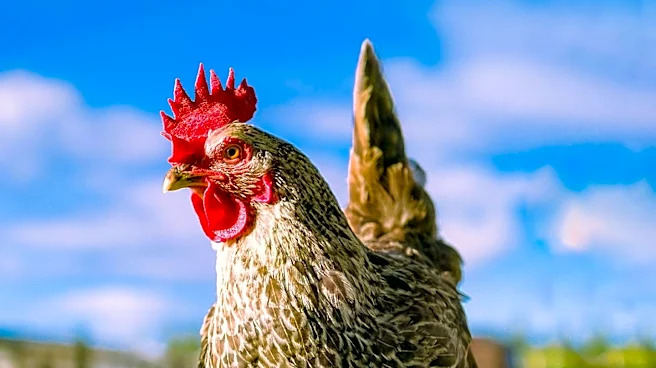
to the general U.S. public as low. The H9N2 virus, which is less pathogenic than H5N1, has been circulating in poultry across Asia and typically causes mild illness in humans. The CDC continues to monitor the situation, emphasizing that the risk is higher for individuals with direct exposure to infected poultry or dairy cattle.
Why It's Important?
The ongoing monitoring of avian influenza is crucial for public health preparedness. While the risk to the general public remains low, the potential for economic disruption in the poultry industry is significant. The situation highlights the importance of maintaining robust surveillance systems and biosecurity measures to prevent outbreaks. The U.S. poultry industry must remain vigilant to protect both public health and economic interests.
What's Next?
The CDC will continue to monitor avian influenza cases globally and provide updates as necessary. Poultry industry stakeholders may need to enhance biosecurity measures to prevent potential outbreaks. Public health officials will continue to educate the public on preventive measures and the importance of avoiding contact with sick or dead birds.