



What's Happening?
The Grüne Band, or Green Belt, is a remarkable ecological corridor that stretches 860 miles along the former border between West Germany and East Germany. Originally a fortified no-man's land during the Cold War, it was designed to prevent East German citizens
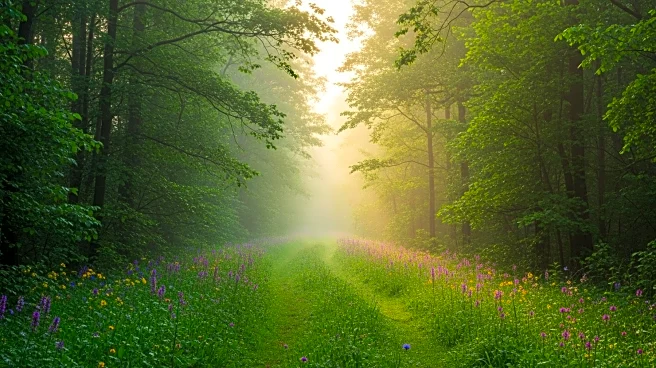
from escaping to the West. Today, this area has been transformed into a vibrant ecosystem, home to rare species of birds, orchids, and other wildlife. The initiative to preserve this accidental nature reserve began shortly after the fall of the Berlin Wall in 1989, led by conservationists who recognized its ecological value. The Green Belt now serves as a living memorial to Germany's division and reunification, linking wetlands, forests, and grasslands across six German states.
Why It's Important?
The transformation of the Green Belt from a militarized zone into a thriving ecological corridor highlights the potential for repurposing former conflict areas into conservation spaces. This initiative not only preserves biodiversity but also serves as a model for other regions worldwide. The Green Belt's success demonstrates how nature can thrive in areas once marked by human conflict, offering lessons in resilience and environmental stewardship. It also underscores the importance of international cooperation in conservation efforts, as similar projects are being considered along other former Cold War borders across Europe.
What's Next?
Efforts to expand the Green Belt beyond Germany are underway, with environmental groups working to create a European Green Belt that spans nearly 8,000 miles across 24 countries. This initiative aims to protect and connect various ecosystems along former Cold War borders, promoting biodiversity and ecological resilience. However, challenges remain, as local governments can alter land usage policies, potentially threatening conservation efforts. Continued advocacy and public support are crucial to ensure the long-term preservation of these natural habitats.
Beyond the Headlines
The Green Belt serves as a poignant reminder of Germany's divided past, while also offering a blueprint for resilience and ecological restoration. It highlights the potential for border zones to become nature reserves, providing both environmental and defensive benefits. As geopolitical tensions rise, the concept of using natural landscapes as defense mechanisms gains traction, emphasizing the multifaceted value of conservation efforts.