





What's Happening?
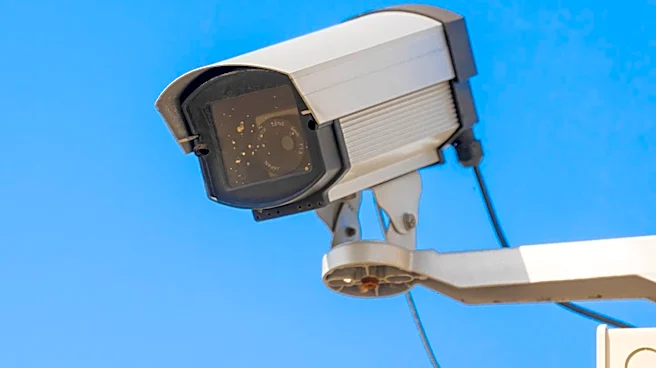
Rep. Lauren Boebert has publicly stated her strong disapproval of Flock cameras, labeling them as "horrible" and expressing a desire for their complete removal from American communities. During an exchange with Pablo Manriquez, a reporter for the MeidasTouch
Network, Boebert emphasized that the Fourth Amendment "is not a suggestion and it's certainly not for sale." While she did not endorse the destruction of these cameras, she affirmed her commitment to preventing federal funding for them. Boebert also questioned the business model of Flock cameras, highlighting concerns about private companies partnering with governments and using taxpayer money, particularly regarding data ownership and control. She indicated that she has written an op-ed on the Daily Caller further detailing her stance.
Why It's Important?
Rep. Boebert's stance on Flock cameras underscores a growing national debate regarding privacy rights versus public safety, particularly in the context of surveillance technology. Her invocation of the Fourth Amendment highlights constitutional concerns about unreasonable searches and seizures, suggesting that widespread use of these cameras could infringe upon civil liberties. This position is significant as it comes from a sitting U.S. Representative, potentially influencing legislative efforts to regulate or defund such technologies. The debate also touches upon the role of private companies in public safety infrastructure and the transparency of data collection and usage. For communities, this could mean a re-evaluation of surveillance policies and a push for greater accountability from technology providers and government entities.
What's Next?
Following Rep. Boebert's vocal opposition, it is likely that the debate surrounding Flock cameras and similar surveillance technologies will intensify. Her commitment to ensuring no federal funding for these cameras suggests potential legislative actions or amendments aimed at restricting their deployment or financial support at a national level. This could lead to increased scrutiny of contracts between local and state governments and private surveillance companies. Furthermore, her remarks may galvanize privacy advocates and civil liberties groups to amplify their efforts against pervasive surveillance. Communities currently utilizing Flock cameras might face pressure to reconsider their use, potentially leading to public forums, policy reviews, or even legal challenges regarding the legality and ethical implications of such systems.
Beyond the Headlines
The controversy surrounding Flock cameras, as highlighted by Rep. Boebert, extends beyond immediate privacy concerns to touch upon fundamental questions about the nature of public space and the balance of power between citizens, corporations, and the state. The reliance on private companies for public safety infrastructure raises ethical dilemmas about data ownership, potential for misuse, and the commercialization of surveillance. This situation could trigger broader discussions about the future of smart cities and the integration of technology into daily life, prompting a re-evaluation of how technological advancements are adopted without eroding foundational democratic principles. The long-term implications could include a shift in public perception towards surveillance, potentially leading to more stringent regulations and a demand for greater transparency in how personal data is collected and utilized by both public and private entities.